In response to the increasingly demanding requirements of building the Military, strengthening national defence, and safeguarding the Fatherland in the new situation, Military Region 4 has been implementing a range of coordinated and practical measures, focusing primarily on the three breakthroughs, with a view to continuously enhancing the overall quality and combat strength of its armed forces.
Fully aware of its functions and assigned tasks, as well as the strategic position of its area of responsibility in the cause of building and safeguarding the Fatherland, in recent years, the Party Committee and Command of Military Region 4 have strictly adhered to the leadership and direction of the Central Military Commission (CMC) and the Ministry of National Defence (MND), maintaining close coordination with provincial Party committees and authorities to effectively carry out military and defence tasks and build increasingly robust all-people national defence, all-people national defence posture, provincial defensive zones, and Military Region defence.
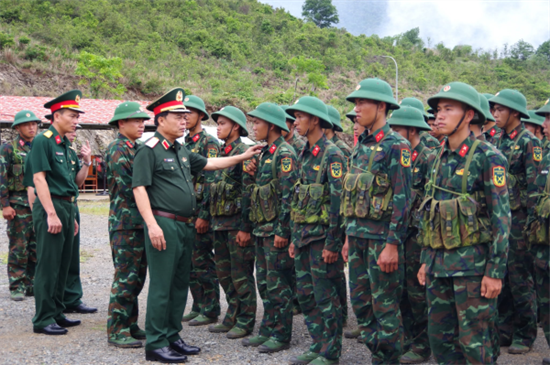 |
| The Military Region Command inspects the training of new soldiers in 2026 |
Notably, thoroughly grasping and executing Resolution 230-NQ/QUTW, dated 2 April 2022, by the CMC on “leadership over the organisation of the Vietnam People’s Army (VPA) for the 2021 - 2030 period and beyond”, Resolution 866-NQ/QUTW, dated 14 June 2025, by the CMC, and Plan 3433/KH-BQP, dated 14 June 2025, by the MND on “restructuring local military organisations towards being adept, compact, and strong to meet the task requirements in the new situation”, the Military Region has issued a thematic resolution and a plan for the breakthroughs in “adjusting force organisation, improving the quality of education and training, and bringing about solid progress in regularity building and discipline observance”.
With strong determination and appropriate, scientifically based measures, the organisation of the Military Region’s armed forces has now been adjusted towards being “adept, compact, and strong”, with a balanced and relatively well-integrated structure between agencies and units, as well as between the active force and the reserve force. The building of “exemplarily, typically” comprehensively strong units has achieved positive results; regularity building and discipline management have made steady progress; the overall quality and combat strength of the armed forces have been enhanced, enabling them to successfully deal with any potential defence and security contingencies.
At present, hostile, reactionary, and politically opportunistic forces in the Military Region’s area of responsibility are stepping up their subversive activities through the strategy of “peaceful evolution”, seeking to promote “self-evolution” and “self-transformation”. Meanwhile, natural disasters, storms, floods, and epidemics are becoming increasingly unpredictable. Against this backdrop, to meet the task requirements, the Party Committee and Command of Military Region 4 have decided to further promote the implementation of the “three breakthroughs” to improve the overall quality and combat strength of the armed forces.
1. Building the Military Region’s armed forces towards being “adept, compact, and strong”
This is both a task and a key measure, as well as a fundamental and core factor in enhancing the overall quality and combat power of the Military Region’s armed forces. Building on the achievements and experience gained, the Military Region is focusing its leadership and direction on ensuring that its agencies, units, and localities thoroughly grasp and seriously execute the resolutions of the Politburo and the CMC, as well as the MND’s plans on organising the VPA for the 2021 - 2030 period and beyond, while closely adhering to the criteria for building modern Military Region armed forces in the new situation. On this basis, the Military Region will review and consolidate the organisational structures of its agencies and units to ensure that they are adept, compact, strong, synchronised, and rationally structured. Priority will be given to ensuring full personnel strength for combat readiness units, units tasked with performing A2 missions, and units stationed in key areas of defence and security. It will continue to lead and direct the effective implementation of the project on restructuring local military agencies towards being “adept, compact, strong”, thereby bringing about a breakthrough in their capacity to provide advice and perform defence tasks at grass-roots level.
To that end, as an immediate priority, the Military Region will closely coordinate with competent agencies of the MND, as well as localities and units, to comprehensively review the system of legal documents relating to defence and military affairs. It will concentrate on revising and supplementing regulations governing leadership over key areas of work, working regulations, and coordination regulations among agencies, units, and forces in performing military and defence tasks and conducting defensive operations, and promulgating regulations defining the functions, tasks, powers, and responsibilities of commune-level military commands. It will resolutely step up the review, assessment, and assignment of personnel in accordance with their capabilities and strengths, while giving priority to selecting officers from main force units who have received basic training and possess hands-on experience to consolidate commune-level military commands. The goal is to ensure that, by 2027, all commune-level military commands are fully staffed, particularly in terms of leadership and command positions, and provided with adequate office facilities. The Military Region will also accelerate the development of the project on “the organisation, training, and operation of the militia and self-defence force and provision of benefits and entitlements for this force in the 2026 - 2030 period”. Emphasis will be on reviewing and consolidating militia and self-defence units in accordance with the law, particularly commune-level standing militia units, and building a strong, extensive militia and self-defence force suited to the two-tier local government model.
Alongside the restructuring of its forces, the Military Region will intensify efforts to improve the leadership capacity and combativeness of Party committees and Party organisations. Importance will be attached to consolidating commune-level military Party cells, improving their operational effectiveness, and building a contingent of officers, especially key ones at all levels, with political steadfastness, good moral qualities, flexible thinking in command, and scientific working methods, capable of meeting the requirements of “seven dares” and the “six clear” principles in performing their tasks. The Military Region will promote innovation and improve the quality of political and ideological education. It will continue to thoroughly grasp and realise “two steadfast commitments”, “two accelerations”, “two preventions”, and the “five pillars” motto, as directed by General Secretary, State President To Lam, together with Directive 676-CT/QUTW, dated 20 June 2026, by the CMC Standing Board on “strengthening leadership and direction in promoting the cultural values of ‘Uncle Ho’s Soldiers’ in the new era”. These efforts aim to ensure that the Military Region’s armed forces remain united in will and action, always ready to undertake and successfully fulfil all assigned tasks.
2. High-quality training and a high level of combat readiness
Recent military conflicts have shown that the widespread use of modern, smart, and long-range precision weapons, unmanned vehicles, electronic warfare systems combined with information warfare and cyberspace operations has become increasingly common. Therefore, to meet the requirements of safeguarding the Fatherland in the new situation, the Military Region will continue to promote innovation in its thinking on the leadership and direction of training and combat readiness.
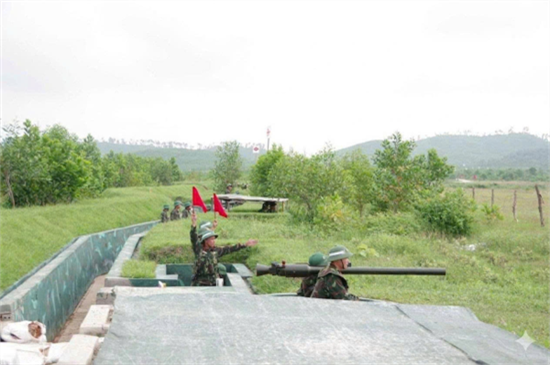 |
| A live fire test in preparation for the Military Region’s 2026 defensive operations exercise |
Grasping and implementing Resolution 1659-NQ/QUTW, dated 20 December 2022, by the CMC, Resolution 755-NQ/ĐU, dated 15 February 2023, by the Military Region Party Committee on “improving the quality of training for the 2023 - 2030 period and beyond”, and the annual military and defence work directives issued by the Chief of the General Staff, the Military Region is focusing its direction on ensuring that its agencies, units, and localities thoroughly grasp the situation, particularly the schemes and tactics, as well as the new types of weapons and equipment employed by potential adversaries. They must take into account the characteristics of the area of responsibility, force structures, and the weapons and equipment currently available. These factors will provide the basis for adjusting, supplementing, finalising, and standardising training content, programmes, and scenarios for different categories of personnel. The mission of safeguarding the Fatherland and socialist regime will serve as the basis for developing training content and programmes. Basic training and mastery of weapons and technical equipment, particularly new-generation systems, will be prioritised, while combat under high-tech warfare conditions will serve as the training environment for troops.
To achieve high effectiveness, the Military Region Command will continue to direct the review of training plans and content as well as refresher-course and training programmes for different categories of personnel, while supplementing and improving mechanisms for managing and directing training work at all levels. It will also direct agencies, units, and localities to attach importance to synchronised, specialised, and increasingly modern training, and intensify night training, mobile training, and high-intensity training. Maximum resources will be mobilised to plan and modernise the system of training grounds and facilities, particularly those of commune-level military commands, comprehensive training centres, urban simulation training areas, and multi-terrain combat training areas. These efforts will help improve training quality and troops’ combat readiness.
Given that the Military Region’s area of responsibility is known as the country's “rain belt and storm centre”, the Military Region directs its affiliates to turn civil defence into a key and regular component of training to meet their mission requirements. It will proactively review, adjust, supplement, and finalise the system of operational documents and plans, as well as coordination arrangements with the public security in the area, in accordance with the Government’s Decree 03/2019/NĐ-CP. Combat readiness procedures will be maintained. The content and methods of exercises, especially the exercises on Military Region defensive operations, defensive zone operations, and civil defence will be comprehensively renewed. These exercises will be closely aligned with the conditions of high-tech warfare and local practical characteristics.
3. Promoting the application of science and technology, and military digital transformation
In implementing Resolution 57-NQ/TW of the Politburo and Resolution 3488-NQ/QUTW of the CMC, the Party Committee and Command of Military Region 4 will continue making investment in shared digital infrastructure and developing large-scale databases, with a view to building “digital units” and “digital military personnel”. In the coming period, the Military Region will continue to coordinate with the Signal Corps, Command 86, and the Military Industry and Telecommunications Group to build and complete a military data transmission network using fibre-optic cables and broadband wireless technology, extending to commune-level military commands, company-level units, stations, and workshops, particularly in border and island areas. It will develop a centralised database system with synchronised connectivity across the fields of personnel management, operations, and logistics, technical, and financial support. The application of geographic information system (GIS) platforms and 3D digital maps will be intensified in the operations of command headquarters at all levels, with the aim of optimising operational processes and transferring leadership, command, and operational management activities to the electronic environment.
The Military Region will strengthen political education and awareness-raising efforts, uphold a sense of responsibility among those in charge, and bring about fundamental changes in working methods and practices. It will promote the application of the MND’s shared software platforms in daily work management and resolutely eliminate manual and paperwork-based working practices. It will coordinate with the Military Technical Academy, the Military Science and Technology Institute, and the Military Industry and Telecommunications Group to train and develop human resources, transfer technologies, and provide guidance on the operation and use of new equipment and digital services. Competitions such as “Creative Youth” and “Training Simulation Software” will be organised more frequently. Information security discipline will be tightened, while capabilities in cyberspace operations will be enhanced.
Building on its 81-year tradition of building, fighting, winning, and growing, Military Region 4 is determined to realise the “three breakthroughs”, build its armed forces into “revolutionary, regular, elite, modern” forces, and successfully fulfil all assigned tasks, thereby contributing to firmly safeguarding the Socialist Vietnamese Fatherland in all circumstances.
Maj. Gen. LE HONG NHAN
Deputy Commander and Chief of Staff of Military Region 4