
Brigade 161 is a core surface combat unit of Naval Region 3, tasked with maintaining combat readiness, providing combat support, and firmly safeguarding the nation’s sacred sovereignty over seas, islands, and continental shelf. To successfully fulfil its assigned missions, the Brigade has always focused on improving its training quality in a fundamental, mastery-orientated, and advanced manner via comprehensive and effective measures.
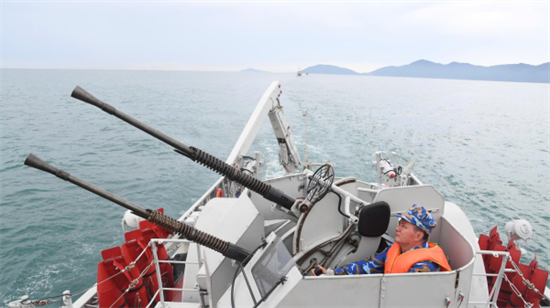 |
| Air defence training at sea |
Fundamental training as the foundation
In the context of modern warfare, characterised by increasingly synchronised, integrated, highly automated weapons and equipment, troops are required not only to master technical operation, but also develop coordination skills and ability to flexibly, accurately respond to situations. However, to master modern weapons and equipment, they must first have a solid foundation in terms of essential skills.
Consistently regarding the protection of national sovereignty over seas, islands, and continental shelf and the building of a revolutionary, regular, highly-skilled, modern Navy, the Brigade has placed strong emphasis on providing fundamental and comprehensive training for all personnel as the basis for enhancing its overall strength and combat readiness. The Brigade’s Party Committee and Command have strictly implemented Resolution 1659-NQ/QUTW, dated 20 December 2022, by the Central Military Commission and Resolution 1378-NQ/ĐU, dated 30 March 2023, by the Naval Service’s Party Committee on “improving the quality of training in the period of 2023 - 2030 and beyond”, as well as annual combat training orders from higher echelons. They have clearly identified key priorities and focal areas, translating those documents into specific training targets and requirements for each group of troops, in line with Brigade’s missions and development. Training has been conducted in accordance with the motto of “basics, practicality, solidity”, with emphasis on synchronised and advanced training, taking practice as the core. Military training has been closely integrated with political education. Combat training has been closely linked with regularity building and discipline management. Attention has been paid to organising training work relevant to tasks, operational plans, adversaries, theatres, organisational structures, and existing weapons and equipment as well as intensifying night training and training under complex weather conditions and scenarios.
Based on their assigned tasks and the characteristics of their existing weapons and equipment, ship units of the Brigade have developed training content and plans suitable for each group of troops, closely associated with key missions such as combat readiness duty, patrol, reconnaissance, maritime management, disaster prevention and control, search and rescue, and exercises, thereby ensuring that troops could quickly familiarise themselves with, proficiently operate, and master available weapons and equipment and meet their task requirements in all situations. Consideration has been given to conducting training according to fundamental programs, increasing field exercises, and improving manoeuvrability and long-duration operational capability under complex conditions, including scenarios involving high-tech weapons and short periods of preparation.
With reference to fundamental training for officers at all levels, the Brigade has concentrated on improving their capabilities in staff work, command and control, and management of troops and equipment. Great value has been attached to training officers at all levels to master principles and methods of command and control in accordance with operational plans and in handling situations, especially during their independent operations at sea under complex conditions, such as unexpected appearance of targets, night combat, bad weather, and rough sea. The Brigade has paid special attention to improving its officers’ training methods and ability to develop training plans suited to specific groups as well as their capacity to inspect and objectively evaluate training outcomes. Doing so has enabled its officers to gradually mature and meet the requirements of command and management in the new context.
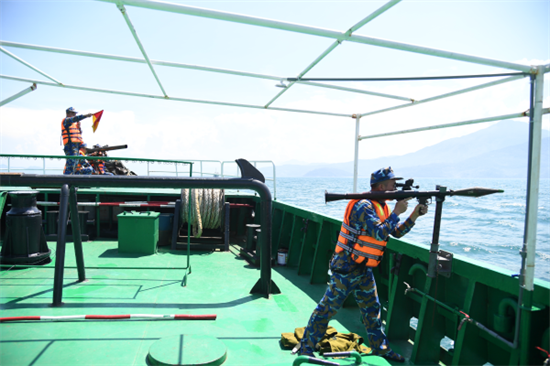 |
| Training troops to use weapons at sea |
Furthermore, the Brigade has focused on training technical specialists to thoroughly grasp the structure, tactical and technical specifications, and operating principles of equipment systems, clearly understand operating procedures, and correctly operate materiel in compliance with regulations, thus ensuring absolute safety for its personnel and equipment. While strictly maintaining the Technical Day, raising a sense of responsibility for equipment management and use, and building “standardised and exemplary” ships, the Brigade has concentrated training on basic maintenance, preservation, and routine repairs as well as timely detection and handling of technical faults during prolonged missions at sea.
For non-commissioned officers and soldiers, the Brigade has prioritised fundamental training from the very first days at their unit, focusing on shipboard drill, armed watch duty, combat positions, and assigned responsibilities, thereby laying the foundation for naval specialised training suited to each individual’s combat role. Besides, specialised practical skills for this force have been developed, while a basic understanding of other shipboard functions has been improved.
As a result, the quality of military training and political education has been significantly raised: 100% of officers have met or exceeded training requirements, with 75% rated good or excellent (over 20% excellent); 100% of officers have been capable of training work at their respective level, with over 80% of squadron-level officers rated good or excellent (nearly 35% excellent); over 75% of ship and specialised officers have been rated good or excellent (nearly 35% excellent); 100% of professional servicemen have met training requirements, with nearly 75% rated good or excellent. In 2025, the Brigade completed 100% of training content, schedules, and programs, with personnel attendance reaching 98.5%; all live-fire and mine-laying and mine-sweeping exercises were rated good or excellent, with absolute safety.
Breakthroughs in mastery-orientated training
In response to the increasingly demanding requirements of managing and safeguarding the nation’s seas and islands in the new context, training troops to operate, employ, and master weapons and technical equipment is not only an immediate requirement, but also a long-term task of special importance. In practice, mastering weapons and equipment is not merely about proficient operation; it is a comprehensive process involving a full understanding of technical specifications, operating principles, and correct procedures as well as effective employment under complex conditions, proper maintenance, and timely handling of incidents. Hence, the Brigade has actively renewed training content, programs, and methods related to the operation and use of weapons and equipment, while proactively reviewing and adjusting training plans in line with its mission requirements.
To master its existing weapons and equipment, the Brigade has stepped up training in the operation of new and specialised systems for different target groups, especially newly graduated officers and personnel newly deployed to the Brigade. Training has been decentralised based on the length of service (over five years and under five years) to ensure that all personnel could master shipboard weapons, equipment, and machinery. Units across the Brigade have been directed to review and adjust training plans according to the characteristics of each class of vessels; training has been conducted progressively from individual ships to formations, from harbour-based to at-sea operations. At the same time, the Brigade has enhanced coordinated training among shipboard sections and conducted cross-training between weapon stations and crew positions; training in handling technical failures and emergency situations and operating equipment under realistic combat and complex weather conditions, such as at night, in rough seas, and unexpected situations, has also been intensified. Affiliates of the Brigade have devoted significant time to night training, coordinated combat training, and training to enhance endurance in rough sea conditions and capacity to respond flexibly and appropriately at sea, particularly in handling situations during mine-laying and mine-sweeping operations across different maritime areas. Emphasis has been placed on improving the quality of inspection and evaluation through integrated tactical exercises, live-fire drills, and training cycles combining maps-based exercises with at-sea manoeuvres. According to annual assessments, 100% of professional servicemen and technical personnel fulfil their duties, with 80% rated good or excellent; 100% are capable of mastering weapons and technical equipment.
Enhancing advanced and specialised training
To meet the very high requirements for technical expertise, coordination capability, and rapid, accurate response in maritime operations under harsh weather conditions and complex environments, alongside fundamental and mastery-orientated training, the Brigade has attached significance to advanced and specialised training for its troops in alignment with operational plans, operational environments, organisational structure, and technical equipment. Particular focus has been placed on training in mine-laying and mine-sweeping operations. In-depth research has been carried out on foreign forces’ organisational structures, intent, tactics, weapon and equipment capabilities, operational methods, and logistics and technical support in maritime and island warfare.
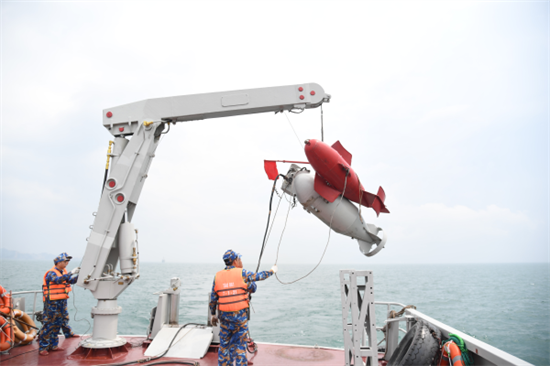 |
| Training troops to deploy weapons and equipment at sea |
Agencies and units across the Brigade have developed and implemented specialised training plans targeting new issues and identified weaknesses, closely linked to the functions and duties of each group of troops. Refresher training for officers at all levels has been closely combined with exercises to enhance the command, technical management, and training organisation capabilities of key officers. The quality of specialised and professional skill training has been improved for each technical field, thus enabling professional servicemen and technical staff to master modern weapons and equipment through hands-on experience in technology transfer and the operation of new systems at their units. Consideration has been given to practical training closely aligned with real combat conditions at sea and coordination among forces to enhance troops’ combat mindset. Training under complex and harsh conditions has been intensified to improve real-world situational response skills, particularly in anchoring and unmooring, anti-surface and anti-air combat, and damage control to ensure ship survivability.
In addition, the Brigade has promoted the application of information technology and digital transformation in training management and direction, while adopting various measures and policies to encourage officers and soldiers to engage in self-study and research. It has also organised competitions, sport events, and inspections to assess its staff’s competence and promptly draw lessons. As a result, the qualifications of its officers and technical staff have steadily improved as the basis for them to successfully accomplish new, difficult, and complex tasks.
With those above-mentioned achievements, the Brigade and many of its subordinate units have been recognised as “Excellent Training Units” for many years. From 2021 to 2024, the Brigade was awarded the title of “Excellent Training Unit” by the Ministry of National Defence and the Navy, together with the Emulation Flag and the title of “Exemplarily, Typically Comprehensively Strong Unit”; two subordinate squadrons were given the title of “Excellent Training Unit” and recognised for excellence in physical training and sport activities. These accomplishments serve as an important motivation for the Brigade to continue improving its training quality and successfully fulfilling all assigned missions.
Sr. Col. NGUYEN VAN TU
Commander of the Brigade