
80 years of formation and development of the National Assembly (NA) of Vietnam constitute a special historical journey closely associated with the cause of national liberation, construction, and protection. During that journey, the NA has always been the centre of unity, representing the will, aspirations, and intellect of the entire people; as the highest organ of state power, it has played a key role in the country’s transformative milestones; it has been affirming its fortitude, intellect, innovation, and aspiration to rise together with the nation.
 |
| Party General Secretary To Lam and Hanoi’s NA delegation meet with voters (photo: baochinhphu.vn) |
80 years ago, on 6 January 1946, responding to the sacred call of President Ho Chi Minh: “Tomorrow will be a joyous day for our compatriots, because tomorrow is the General Election day, because tomorrow is the first day in the history of Vietnam that our people begin to enjoy their democratic rights”, the entire Vietnamese people, from North to South, from lowlands to highlands, from rural to urban areas, regardless of age or gender, took part in the General Election across the country.
With a voter turnout rate reaching 89% and under the progressive, democratic principle of universal, equal, direct, and secret ballot, the first General Election of our country elected 333 deputies, marking the birth of the NA of the Democratic Republic of Vietnam. That victory was a brilliant milestone, signifying a leap forward in democratic institutions; it provided the basis to affirm that the Democratic Republic of Vietnam was a legitimate, democratic state - a State of the people, by the people, and for the people; it demonstrated the absolute trust of the Party and President Ho Chi Minh in our people’s patriotism; it was also an expression of the people’s aspirations and the strength of great national unity.
Over 80 years of accompanying the nation, the NA has built a firm position in the people’s hearts, continuously developing itself, affirming its role as the highest representative body of the people and the highest state power organ of the Socialist Republic of Vietnam, effectively performing its functions of constitution-making, legislation, decision-making on key national matters, and supreme supervision. The NA’s activities reflect a close combination between national development and protection, between building socio-economic institutions and strengthening the synergy of all-people national defence, arousing willpower and unity among the entire people, contributing to victories of the cause of national liberation, unification, construction, protection, and development.
In fulfilling its functions, the NA has always played a central role in building the State’s institutional foundation and establishing legal frameworks for all areas of political, economic, and social life. This is one of its most important, long-term contributions, laying the foundation for the organisation of power, for national governance, and for sustainable national development.
The NA released the 1946 Constitution, the first democratic Constitution in Vietnam’s history, affirming that power belongs to the people, establishing a rule-of-law state model and fundamentals of national governance. Subsequently, the Constitutions of 1959, 1980, and 1992 were adopted in different historical periods, reflecting the development of political thinking and the requirements of building socialism, consolidating the state apparatus, establishing a new economic management mechanism, and fostering international integration. In particular, the 2013 Constitution marked an important development in constitutional thinking by clearly affirming human rights and citizens’ fundamental rights and obligations; it perfected the principle of assignment, coordination, and control of state power, expanding the legal foundation for the country’s renovation and international integration.
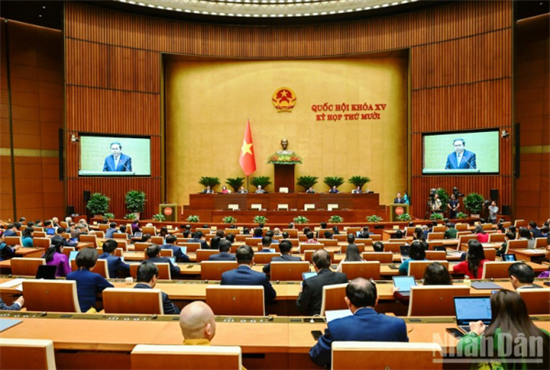 |
| 10th session of the 15th NA (photo: nhandan.vn) |
On the basis of the Constitution, the NA has promulgated an increasingly comprehensive system of laws covering all fields and meeting the country’s development requirements in each historical stage. Economic laws have contributed to forming a transparent investment environment, promoting corporate reforms, improving financial - budgetary institutions, developing capital and labour markets, and advancing international economic integration. Social laws have played an important role in ensuring social security, developing culture, education, and healthcare, stepping up judiciary reforms, and raising the people’s living standards. The legal system on defence and security has been built and comprehensively perfected, thereby contributing to building all-people national defence and people’s security, the postures of all-people national defence and people’s security in close association with a firm “posture of people’s hearts and minds”, ensuring the country’s synergy for protecting national independence, sovereignty, and interests.
The NA has not only fulfilled its legislative role, but also served as a centre for harmonising interests and institutionalising the Party’s lines into laws and policies, ensuring unity between the Party’s leadership, the State’s management, and the people’s right to mastery. Legislative activities have become increasingly scientific and systematic, with policy impact assessment and expert consultation being seen as a mandatory requirement; transparency and openness have been enhanced to fully reflect the interests of the State, enterprises, and the people.
As the highest state power organ, the NA has accompanied the Party and other institutions of the political system in deciding important national issues, promptly meeting the practical requirements of renovation and development. Resolutions of the NA have been issued at critical moments of the country, such as the Resolution on Five-Year Socio-Economic Development Plan (1986 - 1990), which paved the way for developing a socialist-oriented market economy in the renovation period, the Resolution on socio-economic development tasks in 1991, which greatly contributed to stabilising the awareness of cadres, Party members, and the people amid complex domestic and global changes. Many key national projects approved by the NA have become levers for economic development, such as Ca Mau gas - electricity - fertiliser complex, North - South 500 kV transmission line, Ho Chi Minh Road, Son La and Lai Chau hydroelectric plants, Long Thanh International Airport, and North - South high-speed railway. Recently, the NA has passed the amended Law on the Organisation of Local Government, adopting a two-tier local government system. This is an important reform step towards modern local governance, development facilitation, removal of “bottlenecks”, and mobilisation of resources, meeting the requirements of rapid, sustainable growth of localities and the entire country in the new era of national development.
In the socio-economic field, the NA has promulgated master strategies and plans, along with major decisions on fiscal, monetary, public investment, and infrastructural systems, creating a basis for maintaining macroeconomic stability, improving the development environment, ensuring a sustainable growth model with harmony between economic, cultural, social, and environmental objectives. In the field of defence and security, the NA has adopted key strategies, decided on budgets, and approved policies for building revolutionary, regular, elite, gradually modernised, and modernised armed forces. It has ratified many international treaties and decided on issues related to non-traditional security, defence diplomacy, and participation in United Nations (UN) peacekeeping operations, thus raising Vietnam’s position and affirming the country’s responsibility in maintaining peace and stability on regional and global scales.
It can be affirmed that the power to decide major issues has been exercised in an increasingly scientific, transparent, accountable manner, demonstrating the NA’s supreme role in shaping the future, consolidating political stability, and firmly protecting the Socialist Vietnamese Fatherland.
Supreme supervision is a crucial pillar of the NA’s activities, contributing to realising the Constitution and laws, enhancing the effectiveness of state management, and strengthening accountability within the political system. In the past eight decades, the NA’s supervision activities have been continuously renewed and improved, becoming an effective tool for controlling power, promoting administrative discipline, reflecting the country’s development requirements in each period. The NA has step by step expanded the scope and methods of supervision in a comprehensive, in-depth, substantive fashion, exerting a clear impact on the quality of state management and policy implementation. Question-and-answer sessions - a particular form of supervision - have become a democratic, transparent forum, creating space for deputies to engage in frank dialogue, address core issues, and clarify the responsibilities of heads of ministries and sectors. Live television and radio broadcasts of these sessions have enabled voters nationwide to monitor, thereby enhancing openness and transparency, creating pressure to improve the effectiveness of the state apparatus.
Furthermore, the NA has clearly demonstrated its pioneering role in parliamentary diplomacy and enhancing Vietnam’s position. Parliamentary diplomacy has become an important pillar in the overall foreign policy lines of the Party and State, directly contributing to raising Vietnam’s position and international prestige. Through comprehensive parliamentary diplomacy at three levels, namely bilateral, multilateral, and parliamentary cooperation, the NA has not only expanded its cooperation with other legislatures around the world, but also actively participated in, proposed, and led many initiatives at regional and global forums, affirming the image of an innovative, proactive, responsible, deeply integrated NA, laying a foundation for promoting state foreign relations and people-to-people diplomacy, cementing political trust, enhancing mutual understanding, and sharing interests between Vietnam and other countries.
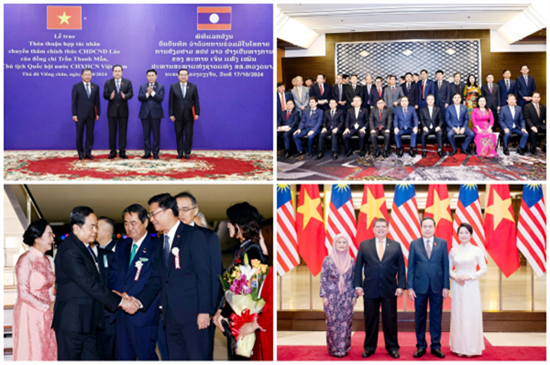 |
| NA’s diplomatic activities (photo: vov.vn) |
In its course of development, especially since the beginning of national renovation, the NA has made significant strides in improving its organisational structure and renewing its modes of operation to meet the increasingly high requirements of national construction, development, and protection. These reforms have not only enhanced the effectiveness and efficiency of the NA’s activities, but also laid an important foundation for developing a socialist rule-of-law state and modern national governance.
At present, the world is witnessing rapid, complex changes; strategic competition among major powers is intense; armed conflicts, sovereignty disputes, and non-traditional security challenges are evolving unpredictably; climate change and natural disasters are greatly affecting sustainable development. Domestically, the process of renovation, socialist-oriented market economy development, and international integration requires a coherent, stable, transparent legal system compatible with international standards. Pressures to renew the growth model, promote digital transformation, develop a green economy, enhance labour productivity, and narrow regional disparities demand timely, effective institutionalisation. The people’s expectations of the state apparatus, including the NA, are increasingly high. These elements necessitate the NA continuing robust reforms and raising the quality of its activities for the sake of national construction and protection in the new period. To that end, it is essential to focus on the following.
First, continuing to improve institutional frameworks and legislative quality in a coherent, modern manner. The NA should continue to renew legislative thinking by analysing policy impacts both qualitatively and quantitatively. Draft laws should be carefully prepared, while the quality of dossiers, comprehensive regulatory scope, and compatibility with the existing legal system should be ensured. The review, amendment, and supplementation of current laws should be conducted regularly to promptly remove overlapping, inadequate provisions and create a transparent, stable legal environment for enterprises, citizens, and competent agencies.
Besides, great value should be attached to fully, opportunely institutionalising the Party’s lines, especially on building a socialist rule-of-law state, improving the socialist-oriented market economy, and realising the national development strategy towards 2030 with a vision towards 2045. New fields with far-reaching impacts on socio-economic life, such as digital transformation, digital data, artificial intelligence (AI), green economy, circular economy, renewable energy, and non-traditional security, should be prioritised with a synchronised legal framework relevant to the country’s development realities and global trends.
Improving laws on national defence and security should continue to be an important requirement to cement all-people national defence and people’s security, build the postures of all-people national defence and people’s security closely linked with an increasingly firm posture of people’s hearts and minds, and enhance capabilities to respond to cyber security and non-traditional security challenges and protect national sovereignty early and from afar.
In addition, the NA should continue strongly renewing legislative activities, stepping up consultation with experts, scientists, social organisations, and businesses, promoting openness and transparency in the law-making process, creating conditions for the people to give opinions and participate in supervising legislation. Application of digital transformation to the law-making process, from shared legal databases to electronic dossiers and technology-based policy evaluation, will significantly improve legislative quality.
Second, raising the quality of decisions on important national issues in a scientific, prudent manner. In the era of national rise, the quality of all decisions made by the NA must be further enhanced, with scientific soundness, transparency, forecasting capacity, and prudence being ensured. This necessitates the NA continuing renewing methods of reviewing, evaluating, and adopting decisions to enable its resolutions to truly become a foundation for modern national governance and protection of the country’s long-term interests.
To that end, the NA needs to carry out strategic analysis, policy impact analysis, and multi-dimensional evaluation for all decisions that greatly affect socio-economic development, defence, and security. The review of 10-year development strategies, 5-year plans, annual state budgets, and key national projects should be based on comprehensive information systems, accurate data, and long-term forecasts. The participation of research centres, independent experts, and NA committees in the appraisal process is a key factor in ensuring a solid scientific basis and minimising institutional risks.
Besides, the NA needs to continue strengthening fiscal discipline and closely supervising budget balances to ensure that national resources will be allocated reasonably, especially to key areas, such as science and technology, education and training, healthcare, strategic infrastructural development, defence, and security. Decisions on investment policies for key national projects should be made on the basis of careful assessment of feasibility, socio-economic effectiveness, impacts on defence, security, and the environment, and relevance to long-term development strategies. Inefficient projects, those with high risks, or those going against sustainable development should be resolutely eliminated.
The NA should continue to promote its role in deciding orientations for modernising the armed forces, developing defence industry, enhancing defence and security international cooperation, and protecting national sovereignty in the new context. Decisions related to civil defence, cyber security, energy security, environmental security, and other forms of non-traditional security should be considered with a long-term strategic mindset to guarantee proactive response to all situations.
The NA should continue assessing economic, legal, and security impacts made by each international agreement comprehensively to ensure that taking part in international commitments will align with national interests, protect national sovereignty, and facilitate sustainable development. It should further supervise the domestication and implementation of international treaties to reduce legal risks and enhance integration effectiveness.
The NA should continue raising the quality of decisions related to the organisation of the state apparatus, devolution of powers, judicial reforms, wage reforms, and local government development. These areas directly affect the effectiveness of governance, the quality of public services, and national competitiveness. Decisions in these areas should be considered carefully, placed within the overall building of a socialist rule-of-law state, and based on general institutional impact assessment.
To raise its decision-making quality, the NA needs to standardise the decision-making process in a transparent, scientific manner with high accountability. Enhancing information disclosure, expanding democratic discussion, and applying digital technology in data analysis and report preparation will help deputies obtain sufficient information to review and evaluate important issues. Close combination between independent appraisal by NA committees, expert feedback, and consultation with the people will create a solid foundation for each NA resolution to truly represent the crystallisation of collective intellect.
Third, enhancing the effectiveness of supreme supervision and maintaining discipline, transparency, and accountability. In the new development context, when requirements for national governance effectiveness, public integrity, and accountability are increasingly high, strengthening the efficiency of supreme supervision becomes a central task aimed at ensuring that state power will operate in accordance with the Constitution and laws, serve the people’s interests, and cement social trust in authorities. Substantive, objective, and effective supervision is not only a constitutional requirement, but also an urgent need amid rapid socio-economic development, emerging issues, and increasing pressure for transparency.
To that end, the NA needs to continue renewing supervisory thinking and methods in a scientific, evidence-based fashion and further adopting big data, digital technology, and risk assessment to accurately identify key areas, especially those prone to violations, negative practices, or great impacts on the people’s lives. Supervisions should be carefully prepared, with long-term plans and clearly defined objectives, subjects, scope, and methods; supervisory models, with a combination of document review, field supervision, expert consultation, and data analysis should be applied. The independence and objectivity of supervisions by NA committees and delegations should be encouraged. The capacity of advisory and support bodies, particularly in policy research and analysis and quantitative analysis, should be raised; cooperation with research centres and independent experts both at home and abroad should be expanded.
Question-and-answer activities must continue to be promoted towards frank dialogue and clarification of individual responsibilities, especially among heads of state agencies. Strengthening thematic questioning, organising explanation sessions more regularly, and monitoring the implementation of post-questioning commitments closely will help create a powerful tool for promoting action and improving state management.
Accountability of the state apparatus, particularly in finance, budgeting, public investment, land management, natural resources and environment, infrastructural development, education, healthcare, and social security, should be tightened. The NA should strengthen in-depth thematic oversight with broad scope, link supervision conclusions to policy amendment and the handling of violations, and guarantee the openness and transparency of the information systems for the people to engage in supervision and evaluate results.
Application of information technology and digital transformation in oversight activities is an urgent requirement. Databases for supervision should be built in a unified, interconnected, timely manner and capable of automated analysis and anomaly detection. Assessing the realisation of supervisory recommendations, publicising supervisory results, and formulating remedial measures in cases of non-implementation or incomplete implementation are important factors in making substantive changes in the state apparatus. This also contributes to strengthening the rigour of the law and ensuring that state power operates properly, effectively, and for the interests of the nation.
Fourth, promoting the role of parliamentary diplomacy and remaining proactive and responsible in international integration. In a world with rapid changes and uncertainties, parliamentary diplomacy is of strategic importance to sustaining a peaceful, stable environment for development and national standing. Therefore, one of the NA’s key tasks in the coming period is to continue stepping up parliamentary diplomacy in a proactive, flexible, substantive, and effective manner to make contributions to realising the Party’s foreign policy lines and protecting national interests.
The NA should continue engaging more widely and deeply in regional and international parliamentary cooperation mechanisms, affirming its influential voice at forums, such as Inter-Parliamentary Union (IPU), ASEAN Inter-Parliamentary Assembly (AIPA), Asia-Pacific Parliamentary Forum (APPF), and Asia-Europe Parliamentary Partnership (ASEP). Proactively proposing initiatives, participating in agenda-setting, and playing an active role at these forums will enable Vietnam to promote its perspectives on peace, cooperation, sustainable development, and respect for international law. This provides an important basis for strengthening the voice of the NA in addressing global issues, such as non-traditional security challenges, climate change, food security, energy security, and digital transformation.
Bilateral parliamentary diplomacy should be promoted in a substantive, in-depth fashion. Exchanges with other legislatures, especially with countries that play a key role in the region and the world, as well as Vietnam’s strategic and comprehensive strategic partners, should be strengthened. Through high-level contacts, delegation exchanges, parliamentary dialogues, and cooperation among specialised committees, the NA can promote legislative cooperation, share national governance experience, develop human resources, and expand cooperation in crucial fields.
Enhancing the quality of ratification of international treaties is also necessary. The NA should ensure that all international commitments will be reviewed comprehensively, prudently, based on in-depth assessment of socio-economic, legal, and national security impacts. Ratification of new-generation free trade agreements, strategic cooperation agreements, or security commitments should go hand in hand with supervision of domestication and implementation to guarantee serious implementation, minimise legal risks, and optimise national interests.
Additionally, parliamentary diplomacy should strongly support defence and security diplomacy. Via bilateral and multilateral parliamentary dialogues, the NA can contribute to encouraging cooperation in maritime security, fighting transnational crime, responding to non-traditional security challenges, participating in UN peacekeeping operations, and building strategic trust with partners, thereby safeguarding national sovereignty and strategic interests amid regional changes.
The NA should step up parliamentary communication, provide timely, accurate information on policies, laws, and national development orientations, proactively counter false narratives, and defend Vietnam’s image and legitimate stance in the international arena. Improving external information capacity will help consolidate national position and garner international consensus and support for Vietnam’s goals.
Fifth, renewing organisational structures, raising the quality of deputies, and accelerating digital transformation in the NA’s activities. Amid the increasingly high requirements of national governance and rapid changes in development conditions, continued renewal of the NA’s organisational and working methods is not only an internal demand, but also stems from practical development process and the people’s expectations of a modern, professional, integrity-driven legislature that acts for the nation’s interests.
To that end, the NA’s organisational model should continue to be refined towards compactness, clear functions, professionalism, and effective coordination. Strengthening and improving the NA’s committees and advisory bodies is critically important. These bodies must possess greater capabilities in policy research, analysis, and strategic forecasting, apply modern scientific methods and digital technologies in appraisal, supervision, and deputy support. Mechanisms for coordination between the NA and the Office of the State President, the Government, the Supreme People’s Court, the Supreme People’s Procuracy, and other bodies within the political system should be improved to guarantee smooth, effective, and non-overlapping operations.
Emphasis should be placed on raising the quality of NA deputies. There should be a systematic, long-term strategy for training and capacity building in law, economics, defence, security, international relations, digital technology, and parliamentary skills, especially for full-time deputies. The role of each deputy in discussion, questioning, supervision, and policy-making should be maximised through the enhanced provision of information, documents, data, and analytical tools. Improving the quality of deputies should be closely linked to the responsibilities to engage with voters and faithfully reflect the people’s opinions and aspirations, thereby ensuring that NA activities are closely aligned with reality and highly representative.
Accelerating digital transformation across all NA activities is essential. Consideration should be given to developing a “Digital NA” with modern technological infrastructure and data analysis and AI platforms to facilitate research, appraisal, and supervision. In addition, the NA should step up information, communication, and engagement with the people via digital platforms. Advances in parliamentary communication, public consultation on draft laws, and mechanisms for electronic feedback will help strengthen democracy, cement social consensus, and promote the people’s right to mastery. Furthermore, applying technology in voter engagement and supervision of policy implementation will allow deputies to grasp realities promptly and make more accurate, effective proposals.
80 years of formation and development of the NA of Vietnam represent a journey of affirming fortitude, intellect, innovation, and aspiration to rise together with the nation in the cause of Fatherland construction and protection. In the new development stage with intertwined opportunities and challenges, the NA will continue fulfilling its role as the highest state power organ, accompanying the entire people, and contributing to building a prosperous, civilised, and happy country and firmly safeguarding the Socialist Vietnamese Fatherland.
TRAN THANH MAN
Member of the Politburo
Chairman of the NA of the Socialist Republic of Vietnam