
Amidst complex and unpredictable regional and global developments, and increasingly fierce strategic competition among major powers, South Korea is gradually adjusting its strategy and strengthening presence in the Indo-Pacific region to achieve its goal of enhancing national status.
A strategic shift from expansion to selectivity
In December 2022, for the first time, South Korea announced its Indo-Pacific Strategy in its entirety, which defines the goal of building the Indo-Pacific into a free, peaceful, and prosperous region, respecting international law, promoting cooperation, openness and transparency, and strengthening trust among nations.
It is believed that the announcement of the Strategy reflects South Korea's desire to become a key player on a global scale. This is not just a guiding slogan, but has become the central theme of Seoul's foreign policy, reflecting an effort to transcend traditional concerns – resolving issues on the Korean Peninsula.
Accordingly, instead of standing outside regional initiatives, Seoul shall actively participates in multilateral cooperation structures, expanding relations with partners to build an image of South Korea as a proactive actor, capable of linking and shaping regional and global issues. However, South Korea's path to become a “Global Pivotal State” also faces numerous challenges, most notably strategic rivalry between the US and China, non-traditional security challenges, tensions on the Korean Peninsula, etc., requiring that this country focuses its resources, balances its interests in relations with major powers, and implement its foreign policy in a cautious manner. Furthermore, differences in interests among countries in the region also have effect on South Korea's ability to implement cooperative initiatives.
 |
| Korean Naval ships travel as fleet |
The election of Lee Jae-myung as President in 2025 is seen as a milestone for the beginning of significant adjustments in South Korea's Indo-Pacific Strategy. According to researchers, while in the past, Seoul pursued an expansive approach prioritising close ties with Western allies, President Lee Jae-myung's administration now has chosen a more cautious and pragmatic one, focusing on national interests and a strategic balance among major partners. Instead of comprehensive expansion, Seoul is choosing areas and partners that align with its core interests – a strategic shift from a broad, overarching approach to a more focused, flexible, and less confrontational one.
Experts also hold that while South Korea maintains an active role in regional cooperation mechanisms, its participation methods have undergone significant adjustments. The alliance with the United States continues to remain the cornerstone in its security policy, but it no longer maintains an absolute dependence as before. In the Indo-Pacific Strategy, South Korea is not merely a recipient of security guarantees, but makes greater contributions to the region. This is demonstrated through increased responsibility sharing, deeper participation in military cooperation, and regional security efforts. By this way, South Korea not only strengthens its alliance but also enhances its standing as a responsible partner. Simultaneously, this reflects the reality that, in a changing international environment, relying solely on a single partner is no longer the optimal choice.
Besides maintaining relations with the United States, South Korea also seeks to stabilise and improve relations with China – its largest economic partner and a crucial pillar in the Indo-Pacific region. In the context of profound changes in global supply chains, maintaining a stable relationship with Beijing is considered vital to securing Seoul's economic interests. Therefore, South Korea pursues an approach that minimises tensions, promotes dialogue, and expands cooperation in less sensitive areas. In its relations with Japan, although some historical issues remain unresolved, both sides are aware of the importance of cooperation in the increasingly complex regional security environment. The improvement of South Korea's relations with Tokyo will contribute to strengthening the regional security structure while facilitating multilateral cooperation initiatives within the Indo-Pacific framework.
Furthermore, South Korea is increasing its role in Southeast Asia and South Asia. Strengthening cooperation with the Association of Southeast Asian Nations (ASEAN) helps South Korea expand its economic space and consolidate its position as a reliable partner. Priority areas for cooperation with ASEAN include technology, digital transformation, clean energy, and sustainable development – reflecting a shift from traditional cooperation to high value-added sectors. Strengthening relations with India – a rising economy with an increasingly important role in the Indo-Pacific regional structure – serves not only economic value but also Seoul's goal of diversifying its partnerships amidst increasing competition among major powers.
Thus, the shift from expansion to selectivity is not simply a change in implementation methods, but reflects a strategic reshaping of South Korea's position in the Indo-Pacific space. This lays the foundation for increased autonomy, especially in the defence and security field, in order to proactively respond to an increasingly complex competitive environment.
Boosting defence self-reliance – A crucial foundation for Seoul to enhance its presence in the Indo-Pacific region
For decades, South Korea's security policy was closely tied to its military alliance with the United States, which was seen as the foundation for stability on the Korean Peninsula. However, given changes in international landscape, particularly Washington's global strategic adjustments, Seoul is increasingly aware of the need to strengthen its self-reliance, considering it a core element in ensuring national security and enhancing its international status. It is believed that, these adjustments clearly reflect a shift in Seoul's strategic thinking: not only focusing on traditional threats, but also proactively adapting to diverse security challenges in the Indo-Pacific region.
After taking office, President Lee Jae-myung's administration promoted a series of policies aimed at strengthening the country's defence capabilities, while meeting the requirements of the Indo-Pacific strategy, with a focus on increasing investment in defence industry, developing modern weapon systems, and enhancing deterrence capabilities. To achieve this goal, the South Korean National Assembly approved a record high defence budget for 2026 of 65.8 trillion won (equal to approximately $44.8 billion), an increase of 7.5% compared to 2025. This highest defence budget in history demonstrates Seoul's strong determination to enhance its military capabilities and ensure self-reliance in the face of changing regional and global security environments.
With a relatively developed defence industry, South Korea continues to promote research and development of modern weapon systems capable of meeting the demands of high-tech warfare. South Korean military is currently investing heavily in long-range missile programmes, multi-layered missile defence systems, and modern combat vehicles, contributing to enhanced self-defence capabilities and reduced reliance on external supplies. Notably, the country is also increasing the application of new technologies such as artificial intelligence, cyber warfare, unmanned aerial vehicle systems, and space technology in the defence sector – factors that help enhance Seoul edge in the military-technological competition.
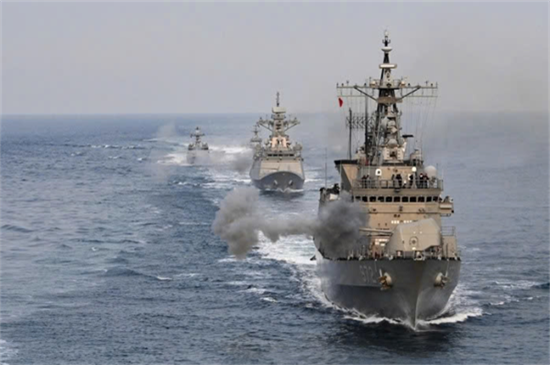 |
| The Korean Eulji Mundeok ship participates in an exercise (Photo: vietnamplus.vn) |
To enhance its self-reliance, South Korea also focuses on developing a domestic defence industry ecosystem, from component manufacturing to core technology development. South Korea continues to boost investment, encourage innovation, and strengthen linkages between the public and private sectors. Building a complete defence industry ecosystem not only ensures continuity in military equipment needs but also provides impetus for economic development through defence exports – a sector increasingly asserting South Korea's important role in the international market.
Along with modernising its equipment, South Korea is gradually strengthening the coordination capabilities and improving the flexibility of its armed forces. Training and exercises are conducted based on real battlefield conditions to enhance the ability to respond to emergencies. The military's operational range is also expanding, targeting broader strategic theatres in the Indo-Pacific region. This reflects a shift in security perceptions, as threats are no longer limited to traditional spheres but are increasingly transnational, requiring more comprehensive preparation.
Analyst holds that, South Korea's recent defence policy adjustments show that this nation is gradually building a solid foundation for a modern, self-reliant, and sustainable defence system; aiming to become an independent actor capable of adapting flexibly to the changing international environment. Instead of taking a single side, Seoul is striving to build a balanced position, maintaining relationships with traditional partners while expanding cooperation with new ones, in order to ensure national interests in the context of increasing strategic competition.
In the long term, this approach could help South Korea increase its influence in the Indo-Pacific region while minimising risks from unpredictable changes in the international landscape. However, researchers also suggest that the success of this strategy will depend on South Korea's ability to maintain a balance with other interests and relationships.
LAM PHUONG, International Department, Hanoi Newspaper and Radio & Television