The Communist Party of Vietnam, the State, and the People have always been bound together in an inseparable relationship, forming a solid political and social foundation and a powerful source of strength for the Vietnamese revolution. This close bond was forged through the struggle for national independence and reunification, strengthened throughout the renewal process, and further consolidated by the achievements in national construction and defence. No force, therefore, can ever sever this profound relationship.
Nowhere else in the world do people refer to the ruling political party and the State in the same way as in Vietnam, where the People call the Communist Party of Vietnam our Party and the Socialist Republic of Vietnam our State.
This reflects the unique and close relationship between the Party, the State, and the People, operating under the mechanism whereby the Party provides leadership, the State exercises governance and facilitates development, and the People are the masters of the country. The dialectic of this mechanism lies in the fact that the People exercise mastery under the Party’s leadership and the State’s governance, while both leadership and governance must adhere to the principle that the People are the foundation. This constitutes an exceptionally solid political, economic, and social foundation for safeguarding, building, and developing the nation, enabling Vietnam to accomplish historic achievements and build the strong and prosperous country it is today.
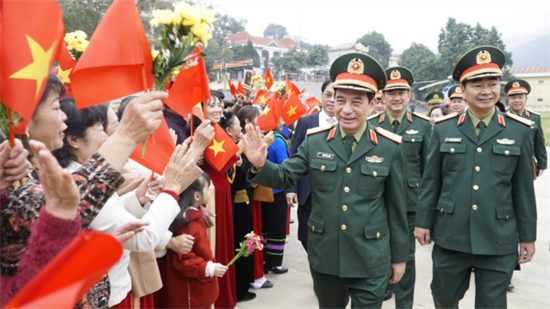 |
| People of Bao Lac commune eagerly greet General Phan Van Giang (Photo: baocaobang.vn) |
After four decades of Doi Moi (Renewal), Vietnam has risen from a poor and underdeveloped country, severely affected by war and prolonged embargoes, to become an economy of increasing scale, with steadily growing international standing and prestige. The material and spiritual well-being of the People has continuously improved; national defence and security have been firmly maintained; national independence and sovereignty have been safeguarded; and the great national unity bloc has been further consolidated. These achievements stem from the Party’s sound leadership, the State’s effective governance, and the unity, creativity, and diligence of the People. They provide compelling evidence of the close and inseparable bond between the Party, the State, and the People, a decisive factor underpinning every victory of the Vietnamese revolution.
As Vietnam enters a new era of development, striving to build a prosperous, civilised, and happy nation and to become a high-income developed country, the Party and the State are implementing a range of strategic policies and initiatives. These include streamlining the organisational apparatus to enhance the effectiveness and efficiency of national governance; promoting innovation and digital transformation; advancing the green and circular economy while protecting the environment; improving institutions; developing modern infrastructure; renewing the growth model; enhancing the quality of human resources; ensuring social welfare; and continuously improving the People’s living standards. To further build and refine a comprehensive institutional framework for the country’s rapid and sustainable development, the 14th National Party Congress affirmed: “Continue to renew thinking in a bold and substantive manner, promote strategic breakthroughs, foster a new development ecosystem, uphold the principle of achieving stability through development and using stability to drive further development, while continuously improving the People’s well-being and happiness; …”
However, hostile, reactionary, and politically opportunistic forces have sought to exploit certain difficulties and challenges arising during the implementation of these major policies and initiatives to undermine the country. They deliberately spread the false narrative that the consolidation of administrative units would erode local identities, disrupt people's lives, and reduce access to public services. With regard to major infrastructure projects, they exploit petitions, disputes, and shortcomings in compensation, assistance, and resettlement policies to incite public discontent. In the field of environmental protection and sustainable development, whenever the State introduces policies to reduce emissions, control pollution, or accelerate the energy transition, these hostile elements immediately disseminate distorted and misleading information, portraying such measures as policies that “impose burdens on the People” or “make life harder for the People”, and so forth. Their ultimate objective is to undermine the great national unity bloc, weaken the country's political and social foundations, and gradually deny the Party's leadership and the State's role in governance and development. Yet, such allegations have been decisively refuted by the vivid realities of the Vietnamese revolution.
A consistent principle underpinning the Party's entire leadership is that the People are placed at the centre, recognised as the driving force, and regarded as the ultimate objective of development. President Ho Chi Minh once instructed: “Whatever benefits the People must be pursued to the utmost; whatever harms the People must be avoided at all costs.” This is not merely an ethical principle but also a fundamental political principle of our system. Since its inception, the Party has affirmed that it has no interests apart from those of the nation and the People. Accordingly, every policy and guideline is directed towards improving the People's material and spiritual well-being, safeguarding their right to mastery, and creating favourable conditions for their comprehensive development.
The policy of streamlining the organisational apparatus provides a clear example. The restructuring and rationalisation of the administrative system are not intended to create difficulties for the People; rather, they aim to build a modern public administration that serves the People more effectively, reduces operating costs, and ensures the efficient use of national resources. Likewise, developing a modern infrastructure system is an objective requirement of national development. No country can achieve industrialisation and modernisation without integrated transport, energy, logistics, and digital infrastructure. While major infrastructure projects may have certain short-term impacts on some communities, in the long run they will create new development opportunities, generate employment, raise incomes, and improve the quality of life for millions of people.
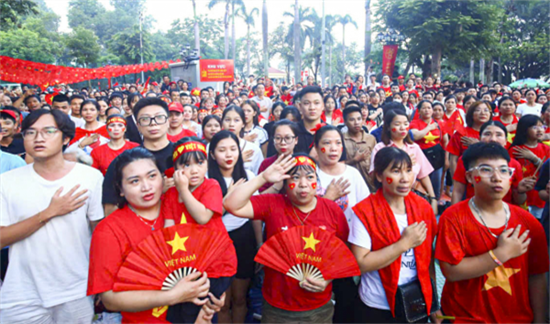 |
| Large crowds of People march to Ha Noi streets to celebrate the 80th Anniversary of National Day (Photo: tuoitre.vn) |
In the field of digital transformation, many citizens and businesses may initially encounter difficulties in adapting to new methods of governance and service delivery. Nevertheless, digital transformation is an irreversible trend of the modern era. Its ultimate purpose is to simplify administrative procedures, enhance transparency, and save time and costs for both citizens and businesses, while at the same time improving the effectiveness of national governance. Similarly, policies promoting a green and sustainable economy, environmental protection, and the energy transition are not only essential requirements of international integration but also responsibilities owed to future generations. A clean living environment, sustainable economic development, and a society resilient to the challenges of climate change are among the most tangible benefits enjoyed by all. More importantly, throughout both the formulation and implementation of policies, the Party and the State consistently listen to the People's views and aspirations. Guiding principles such as “the People know, the People discuss, the People implement, the People inspect, the People supervise, and the People benefit” are increasingly being institutionalised through concrete political and social mechanisms. Wherever shortcomings, limitations, or policies inconsistent with practical realities arise, the Party and the State promptly identify them and proactively make the necessary adjustments, refinements, and improvements. This clearly demonstrates the progressive, humane, and People-centred nature of our system.
The achievements in combating corruption and other forms of misconduct in recent years provide compelling evidence of this reality. The strict handling of numerous officials found guilty of wrongdoing, regardless of their rank or position, demonstrates the Party's determination to uphold discipline, safeguard the interests of the People, and strengthen public confidence. A Party that dares to confront its shortcomings, rectify its mistakes, and resolutely combat corruption is a Party that consistently places the interests of the People above all else.
The history of the Vietnamese revolution is, in essence, the history of the close and inseparable bond between the Party, the State, and the People. From its earliest days, the Party earned the trust, protection, and wholehearted support of the People. Throughout the struggle for national independence, millions answered the Party's call and willingly sacrificed themselves for the cause of national liberation. Without the Party's leadership and the support of the People, there would have been no success of the August Revolution in 1945, no Dien Bien Phu Victory in 1954, and no Great Spring Victory in 1975. Likewise, without the Party's leadership and the support of the People, the remarkable achievements of the Doi Moi (Renewal) process would not have been possible. It is through the nation's struggles and development that the relationship between the Party and the People has evolved into an inseparable bond. The Party leads through sound policies, sacrifice, and responsibility to the People, while the People place their trust in the Party, support its policies, and actively participate in their implementation. This is a reciprocal relationship, characterised by close interdependence and mutual commitment.
Today, as Vietnam enters a new era of development marked by both unprecedented opportunities and complex challenges, hostile forces are intensifying their efforts to drive a wedge between the Party, the State, and the People. Nevertheless, such distorted narratives cannot alter the fundamental nature of the political system, deny the country's remarkable achievements, or weaken the enduring bond between the Party, the State, and the People—a foundation forged throughout the history of the Vietnamese revolution and strengthened by the sacrifices of generations of Vietnamese people. Nor can they deny the undeniable reality that the People are the direct beneficiaries of the achievements of Doi Moi; that they witness the country's progress every day; and that they know full well which force has provided leadership, governance, and development while standing shoulder to shoulder with the nation through its most difficult times.
The Vietnamese State is, by its very nature, a State of the People, by the People, and for the People. State power belongs to the People. Every activity of the state apparatus is directed towards serving the People and is subject to their oversight. This constitutes the essential foundation for ensuring the unity of the State's interests with those of the People. The inseparable bond between the Party, the State, and the People continues to be strengthened through concrete actions, including enhancing the Party's leadership capacity and combat effectiveness; building a streamlined, effective, and efficient state apparatus; promoting socialist democracy; improving the People's living standards; promptly addressing issues arising from practice; and strengthening dialogue with, and responsiveness to, the People's views and aspirations. When the Party's will is aligned with the aspirations of the People, when the Party's interests are unified with those of the People, and when the State's fundamental purpose is to serve the People, this forms the core political and social foundation and the wellspring of Vietnam's strength. It is precisely for this reason that every attempt to divide the Party, the State, and the People has failed, is failing, and will inevitably continue to fail.
No force can ever sever the inseparable bond between the Party, the State, and the People of Vietnam, for it is far more than a political relationship. It is the embodiment of history, trust, responsibility, and the shared aspiration for a strong, prosperous, civilised, and happy Vietnam, steadfastly advancing into a new era of national development.
Professor, Dr. VU VAN HIEN, Former Member of the Party Central Committee; Former Editor-in-Chief of the Communist Review