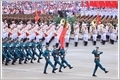
The great victory of the August Revolution of 1945 ushered the Vietnamese people into the era of “national independence associated with socialism”. Over more than eight decades, under the leadership of the Communist Party of Vietnam (CPV), our people have not only gained and firmly safeguarded national independence, sovereignty, unity, and territorial integrity, but have also brought the country into the “era of national rise”. Those vivid realities and great achievements of historical significance have shattered all distortions by hostile forces, affirming that the Vietnamese revolutionary path from national independence to a powerful and prosperous socialist country is fully consistent with practice and objective laws.
 |
| Illustrative photo (chinhphu.vn) |
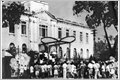
On 2 September 1945, at Ba Dinh Square, President Ho Chi Minh read the Declaration of Independence, solemnly proclaiming the birth of the Democratic Republic of Vietnam - the first workers’ and peasants’ State in Southeast Asia to the entire nation and the world.
After more than 80 years under the leadership of the CPV, “our country has transformed from a semi-feudal colonial territory into an independent and free nation developing towards socialism; from slavery, our people have become masters of the country and masters of society”. From a poor, backward, and underdeveloped country devastated by wars and subject to embargo, Vietnam has risen to become a developing country with upper-middle income, political - social stability, firm national defence and security, an open foreign policy, and an ever-growing international position and prestige. Today, our entire Party, people, and Military are firmly moving into a new era of development to realise the strategic objectives: by 2030, Vietnam will become a developing country with modern industry and upper-middle income; by 2045, Vietnam will become a developed, high-income country steadily advancing towards socialism; with the “vision for 2130, Vietnam will become a highly developed socialist country that is civilised, modern, imbued with national identity, capable of innovation, and endowed with enduring vitality, … making a worthy contribution to humanity”. This journey is an inevitable development, guided by the CPV’s steadfastness in the goal throughout all stages of the revolution: “national independence associated with socialism”. At its 14th National Congress, our Party once again emphasised the need to “remain steadfast in the goal of national independence and socialism”; it affirmed that this is not only the foremost lesson drawn from 40 years of renewal, but also the foremost guiding viewpoint for the cause of national construction and development in the new period.
Identifying the schemes and objectives behind hostile forces’ sabotage
In the face of the development of the Vietnamese revolution, hostile, reactionary, and politically opportunistic forces both at home and abroad have never ceased their activities aimed at sabotaging our country. They have focused on attacking the Party’s ideological foundation, distorting the Vietnamese revolution’s path towards socialism, and denying the achievements of national development under the leadership of the CPV. They have repeatedly distorted the facts by claiming that Vietnam’s continued adherence to the goal of “national independence and socialism” is a “mistake” and “runs counter to the trend of the times” (!), and that the world socialist system and the Soviet Union - the stronghold of socialism - no longer exist, yet Vietnam is still “steadfastly advancing towards socialism”, which they describe as “out of step with the times” (!). They have trumpeted the national development objectives for 2030 and 2045 and the orientation towards 2130 set by our Party as “utopian” and “unfeasible” (!). According to them, Vietnam can only become a powerful and prosperous country if “the CPV abandons its leadership role in society”, “steadfastly follows the capitalist development path” and “political pluralism and a multi-party system” (!), etc.
The aim of these sabotage efforts is to erode our people’s confidence in the Party’s leadership and in the path of socialism building, promote “self-evolution” and “self-transformation” from within, ultimately abolish the leadership role of the CPV, and “steer” the development path of our revolution towards capitalism. This consistent aim of hostile forces remains unchanged, but at each particular point in time, their tactics of sabotage have resurfaced under highly sophisticated disguises. However, both the theory and historical practice of the Vietnamese revolution refute these distortions and clearly demonstrate that the journey of “national independence towards socialism” is not an emotional choice made by our people. It is the inevitable outcome of the entire nation’s arduous struggle for national independence, construction, and protection under the leadership of the CPV. This journey is consistent with the realities of Vietnam and the objective laws governing the development of the times.
 |
| Illustrative photo (qdnd.vn) |
The objective choice of history and the inevitable development law of the Vietnamese revolution
Looking back at the historical context of Vietnam in the late 19th and early 20th centuries, we could realise that, before the CPV was founded (3 February 1930), our people’s path to national liberation was “as dark as if there were no way out”. Various paths to national salvation and resistance against French colonialism under the flag of the Can Vuong movement, or through movements following bourgeois and petty-bourgeois tendencies (Dong Du, Duy Tan, Viet Nam Quoc Dan Dang, etc.), although highly heroic, all ended in failure due to the lack of a sound political line and a vanguard class capable of exercising effective leadership. Only when leader Nguyen Ai Quoc, after nearly 30 years of travelling abroad in search of a path to national salvation, embraced and disseminated Marxism - Leninism in Vietnam and organised the CPV to lead the revolution was the Vietnamese revolution able to put an end to the crisis concerning the path to national salvation. He affirmed: “There is no other path to save the country and liberate the nation than the path of proletarian revolution”.
From that point onwards, the Vietnamese revolutionary cause was placed on the trajectory of the proletarian revolution and became an integral part of the world revolution; the issue of national independence associated with socialism became the fundamental line of the CPV, the “red thread” running throughout the revolution, and the inevitable law governing its development. The Brief Political Platform (February 1930) of the CPV, drafted by leader Nguyen Ai Quoc, clearly identified two stages of the Vietnamese revolution: “to carry out the bourgeois-democratic revolution and the land revolution to advance to communist society”. These two stages are closely interconnected: national independence is the prerequisite for advancing towards socialism, while socialism is the path to safeguarding and developing the fruits of national independence. Leader Ho Chi Minh emphasised: “If a country is independent but its people do not enjoy happiness and freedom, then independence has no meaning”; therefore, once independence has been gained, the country must advance towards socialism, because “only socialism and communism can liberate oppressed nations and working people throughout the world from slavery”. By upholding “national independence and socialism”, our Party rallied the strength of the entire nation and combined it with the strength of the times, leading the Vietnamese revolution to the victory of the August Revolution of 1945 and the victories of the two resistance wars against French colonialism and US imperialism, bringing Vietnam into an era of independence, freedom, and socialism.
In the final years of the 20th century, the collapse of socialism in the Soviet Union and Eastern Europe was a major loss for the world revolutionary movement. Faced with this situation, the CPV demonstrated great political mettle in recognising that this was not the collapse of Marxism - Leninism itself or of the socialist ideal, but rather the collapse of a dogmatic and rigid model that was slow to reform and had made numerous mistakes in the leadership lines and in organisational work and personnel work of the ruling communist parties. For that reason, the CPV remained determined to build the country along the socialist path, with firm confidence that: “According to the law of historical evolution, humanity will certainly advance towards socialism” and “advancing towards socialism is the aspiration of our people, the correct choice of the CPV and President Ho Chi Minh, and is in line with the trend of historical development”.
Remaining steadfast in the goal of “national independence associated with socialism” and creatively applying Marxism - Leninism and Ho Chi Minh’s thought, the CPV pursued a sound renewal policy, beginning with the 6th National Party Congress in 1986, and successfully adopted the “socialist-orientated market economy” model - a fundamental, creative theoretical breakthrough - harmoniously combining the universal laws of the market economy with the positive nature of the socialist system, enabling Vietnam to develop strongly and integrate deeply into the world. Standing firm and achieving strong development following the greatest political crisis of the world communist movement is compelling evidence that Vietnam’s revolutionary path from national independence towards socialism is entirely correct and consistent with Vietnam’s realities and the laws of development of the times.
Great achievements of historical significance constitute vivid practical evidence refuting distortions
While in 1945, under the rule of fascist, colonial, and feudal forces, 95% of Vietnam’s population was illiterate, the economy was exhausted and more than 2 million people died of starvation, today, under the leadership of the CPV, the cause of national renewal and construction towards socialism has produced “great achievements of historical significance”.
 |
| Illustrative photo (qdnd.vn) |
In the economic field, Vietnam’s GDP growth rate has remained stable, ranking among the leading countries in ASEAN for many years. In 2025, the size of the economy exceeded $514 billion, ranking fourth in Southeast Asia and 32nd in the world; GDP per capita reached $5,026, placing Vietnam among upper-middle-income countries. Vietnam’s total merchandise import and export turnover exceeded $930 billion in 2025, with a trade surplus maintained for 10 consecutive years, affirming its position among the world’s 20 largest trading economies. Vietnam’s economy has also intensively and extensively integrated into the global economy; Vietnam has established economic and trade relations with 230 countries and territories and signed 16 free trade agreements (FTAs), including a number of next-generation FTAs; it is a member of numerous international economic organisations and forums. Intensive and extensive integration into the global economy has created favourable conditions for attracting resources, expanding markets, strengthening the economy’s resilience, mitigating risks amid uncertainty in global trade, enabling Vietnam to effectively combine internal and external strength and realise its development goals for 2030, 2045, and 2130.
In the social, cultural, and social security fields, our Party and State have consistently advocated that “economic growth must go hand in hand with social progress and equity at every step and through every policy”. On the foundation of economic development, the Government’s policies and solutions for sustainable poverty reduction have been implemented synchronously and effectively in the spirit of “leaving no one behind”. As a result, the living standards of the people have improved markedly; the proportion of poor households fell sharply from 58% in 1993 to 1.3% in 2025 under the multidimensional poverty standard, and the United Nations (UN) ranked Vietnam among the leading countries in achieving the Millennium Development Goals. Vietnam’s Human Development Index (HDI) has continuously increased, reaching 0.766 in 2025, placing the country in the high human development group and ranking 107th out of 193 countries and territories. Health insurance coverage reached 95.2% of the population in 2025; the average life expectancy of the population increased from 40 years in 1945 to 74.8 years in 2025. Vietnam’s education system has also made remarkable progress, with a comprehensive system ranging from pre-school to university education. The goals of eliminating illiteracy and universalising primary education were fulfilled in 2000; lower-secondary education was universalised in 2010, while pre-school education for five-year-old children was universalised, with an enrolment rate of nearly 99% in 2017. Vietnamese students regularly achieve high rankings at regional and international Olympiads in Mathematics, Physics, Chemistry, Biology, and Informatics, winning numerous global science and engineering awards.
In the fields of defence, security, and foreign affairs, as affirmed in the Documents of the 13th National Party Congress: “Our country has never had such fortune, potential, position, and international prestige as it does today”. National independence, sovereignty, unity, and territorial integrity have been firmly safeguarded. Defence and security have been continuously strengthened in terms of potential, force, and posture. All-people national defence, the posture of all-people national defence, people’s security, and the posture of people’s security have been increasingly consolidated and closely linked with the “posture of people’s hearts and minds” to maintain a peaceful environment for national development.
In 1945, our country was still “a colonial and semi-feudal territory” and had no place on the world map; today, it is an independent country maintaining diplomatic relations with 195 countries around the world, including all 193 UN member states; among them are 43 comprehensive and strategic partners, including all five permanent members of the UN Security Council. Vietnam has twice successfully served as a non-permanent member of the UN Security Council and is currently serving as a member of the UN Human Rights Council for the third time, for the 2026 - 2028 term. In addition, as of May 2026, Vietnam had deployed 1,358 officers and personnel from the People’s Army and People’s Public Security forces to participate in UN peacekeeping operations at missions and headquarters, affirming the image of a peace-loving Vietnam that is responsible towards the international community.
The above-mentioned realities in Vietnam have not only convinced people at home but have also received recognition from international friends. During his official visit to Vietnam and participation in the opening ceremony for the signing of the UN Convention against Cybercrime from 24 to 25 October 2025, UN Secretary-General António Guterres emphasised that “Vietnam is a model of a nation that has overcome wars to become one of the world’s development success stories”; he regarded Vietnam as vivid evidence of a path of peace and development and as a “pillar of multilateralism”. In an interview with a Vietnam News Agency reporter ahead of the 14th National Congress of the CPV, Mr Veeramalla Anjaiah, a senior researcher at the Centre for Southeast Asian Studies (CSEAS) based in Jakarta, Indonesia, stressed: “Vietnam is a prime example of how gradual reforms, political stability, and a long-term vision can generate sustainable and inclusive growth”. He further affirmed: “What has been achieved over the past four decades shows that Vietnam has every reason to be confident as it enters a new era of development”.
With the country’s increasingly strengthened position and potential, with the high political determination of the entire Party, people, and Military in synchronously, effectively executing the strategic resolutions of the 13th Politburo and the 14th Politburo, and with breakthrough, highly feasible solutions for the Resolution of the 14th National Party Congress and subsequent Party congresses, the objectives of socio-economic development for 2030 and 2045 and the vision towards 2130 will certainly become a reality.
Looking back at the 81-year journey since the first Independence Day (2 September 1945), we have even greater appreciation and pride for the path chosen by our Party, Uncle Ho, and people. History has provided irrefutable practical proof: only national independence associated with socialism can ensure that Vietnam maintains independence, sovereignty, unity, and territorial integrity, develops into a powerful, prosperous, civilised nation, and enables the people to enjoy a prosperous, free, and happy life. No matter how sophisticated hostile forces’ distortions may be, they are merely like “ploughing the sand”, unable to stop the inevitable historical current of the Vietnamese people “from national independence to a powerful and prosperous nation”.
Under the Party’s glorious flag, promoting the immortal spirit of the August Revolution and Independence Day, our entire Party, people, and Military will remain united as one, continue to uphold the principle of “national independence and socialism”, maintain unwavering faith in the bright future of the nation, courageously overcome all difficulties and challenges, proactively fight and thwart all schemes and tactics of hostile forces. This is the firm foundation for confidently leading the country forward in the “era of national rise” and successfully realising the aspiration of “becoming a powerful, highly developed, civilised, modern socialist country”.
NGUYEN NGOC HOI