
Clearly understanding the moving trend to digital space and multi-domain operations in modern warfare, the French Army has been intensely implementing the comprehensive digitalisation programme, considering it as one of the pivotal pillars to enhance their command, management and operational effectiveness, of which, the digitalisation of logistic and technical support is one of the priorities in order to improve the management, optimise the resources and strengthen the combat readiness.
Given the high requirements of the logistic and technical support, the French Army has synchronously implemented various measures to speed up the digitalisation programme combined with the army modernisation process.
In 2029, this country issued the Digital transformation strategy in defence for the 2019 - 2025 period, towards building the smart logistic-technical system with flexible connectivity, built on advanced digital technology platforms. This strategy focuses on integrating and synchronising the logistic and technical information systems of various services and arms into a centralised database, serving the advanced real-time management, command, control, and decision-making.
To implement this strategy, in 2021, the French Army established the Digital Defence Agency in order to unify the coordination of large-scale digitalisation programmes, focusing on enhancing supply chain management capacity, logistics data, and command and technical assurance systems, at the same time, promote the research and application of advanced technologies, such as cloud computing, artificial intelligence, big data, etc. in building modern logistical and technical systems based on a digital connection platform, thereby, enhancing the support capability, mobility, and combat strength of all forces.
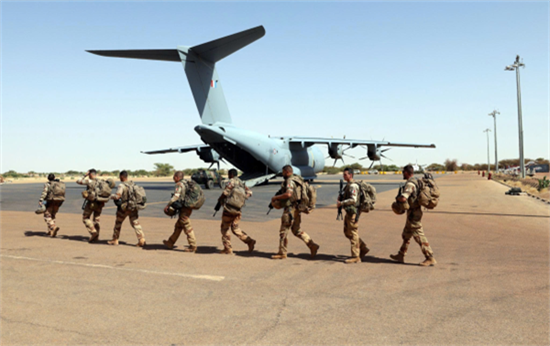 |
| French Military deployed ianti-terrorism operations coded name Barkhane during 2014-2022 period |
Implementation steps
According to military experts, the digitisation of French military logistics is deployed in the way of developing an intelligent, data-driven system that features predictive capabilities, flexible command, and optimises the supply chain. The core of this process is not only the application of modern technology but also a fundamental transformation of the support method - shifting from a plan- and experience-based approach to a data-driven one, providing the foundation for commanders to make accurate decisions. All integrated digital platforms of all forces are synchronously deployed, enabling the real-time collection, interconnection, and analysis of material consumption data. This, thereby, enables accurate forecast of support requirements for each specific unit, location, and mission; helps the support operations gradually transition from a passive response to proactive preparation, contributing to limiting the risk of shortages and reducing unnecessary logistical inventory.
In fact, the French Army is accelerating the digitisation of materials and equipment through electronic identification codes, radio frequency identification technology, and NATO codification standards linked to supply chain management, aiming to establish a mechanism of highly accurate material lifecycle control. Accordingly, each logistical and technical asset is not only quantitatively managed, but also comprehensively tracked for location, status, and usage history, which enhances the transparency and synchronisation in inventory and control. Especially, the research, and the widespread and unified application of blockchain technology, with its immutable data storage and distributed “ledger” mechanism, has enhanced the integrity, traceability, strict supply chain tracking, and information security throughout the support system without the need for a single centralised control centre. When data is integrated into a system of digitalised asset management, the real-time information retrieval capability becomes a key factor, enabling the commanders to maintain a firm grasp of the logistical - technical support situation to make accurate and timely decisions, especially in emergency situations.
With the standardised and synchronously connected data, the French Army continues to advance the digitalisation of transport operations towards automation and optimisation. Some smart transport management platforms use data analysis algorithms to determine the appropriate transportation options, creating a balance between support speed, vehicle operation efficiency, and costs. The practical implementation in training and exercises demonstrates that the effective operation of real-time transportation tracking systems enables commanders to strictly control the logistic support process and proactively adjust plans. As a result, this shortens the time of vehicle deployment, ensures timely supply delivery, and maintains the continuous operational capability of the forces under severe environmental conditions.
To enhance the digitalisation of the technical work, the French Army focuses on implementation towards data-driven equipment lifecycle management, synchronous connectivity, and reliability improvement. The focus of this process is to shift the maintenance and repair procedure from a periodically scheduled to an accurately data-driven predictive approach. Through the ground equipment technical management system; combined with large-scale data processing and exploitation platforms, as well as sensor technologies and Internet of things, all equipment technical parameters are constantly collected and processed, allowing for early anomaly detection, failure risk forecast, and optimal maintenance plan suggestions. Hence, the equipment downtime is significantly reduced, the working efficiency is enhanced, contributing to maintaining a stable technical coefficient and extending the lifespan of equipment.
According to some military researchers, based on standardised and interconnected data, the French Army is gradually building a centralised technical information system that integrates all maintenance history and records, and the operational status of each piece of equipment. This system enables the real-time information updates and sharing among units and maintenance facilities, thereby, enhancing the efficiency of weapons and equipment lifecycle management; it also facilitates the implementation of remote technical support. This is especially meaningful in dispersed areas far from bases, where logistical and technical support must be fast and accurate.
In addition, applying digital technology in technician training has created a significant improvement in the quality of the workforce. The systems of simulation, virtual reality, and augmented reality allow for the highly accurate and realistic replication of operation and repair environments, helping technicians practice their relevant skills under safe conditions, reduce costs, and enhance their ability to handle complex situations.
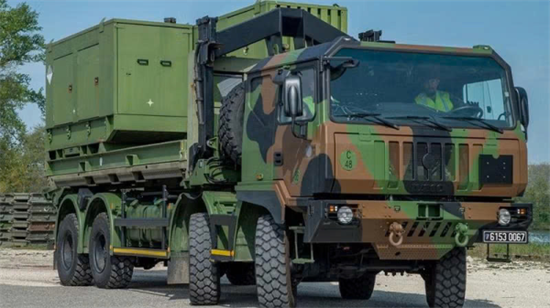 |
| A multi-purpose transportation vehicle of the French Military |
Results and challenges
According to some military experts, the digitalisation programme has contributed to improving the efficiency of the French Army's logistic and technical support. The application of integrated information systems in ground equipment management and maintenance has greatly shortened the time for fault detection and solution, as well as materials supply. Instead of relying mainly on manual processes, units can track the technical status of equipment in real time to proactively plan appropriate maintenance and repairs. The practical deployment of the French Army's operations in Africa shows that, by intensely applying the technological solutions and enhancing logistical and technical management capabilities, all combat forces have effectively maintained the continuous operation of vehicles and equipment under severe climate and weather conditions, as well as complex operational terrains.
Besides, the digitalisation of the supply chain and material lifecycle management enables the French Army's logistic and technical support system to optimise the inventory levels, mitigate excess stock and losses, reduce costs, and enhance the management transparency. Technologies such as the radio frequency identification and centralised database enable accurate inventory and rapid traceability; contributing to the standardisation of management processes, reduction of data discrepancies, and enhancement of equipment and vehicle control. Especially, the digitisation programme has contributed to enhancing the mobility, force deployment, and combat capability of the French armed forces outside their territory. Due to the ability to connect and share data among all command levels, operating units, and logistics support bases, the coordination of logistic and technical support is conducted faster and more accurately. Sensor-based predictive maintenance solutions help reduce the risk of unexpected failures, thereby, improving equipment technical readiness and enabling the maintenance of high combat readiness even when deployed in remote battlefields and complex climatic environments.
However, military experts also believe the digitalisation programme for logistic and technical support poses significant challenges for the French armed forces, particularly the massive investment costs and prolonged implementation time. The building of digital infrastructure, software development, system integration, and advanced human resource training require a huge budget, not only in the initial phase but also during operation, maintenance, and upgradation. This creates pressure on the defence budget, especially in the context of France simultaneously implementing hardware modernisation programmes. Besides, the information security and cybersecurity risks are increasing - as the logistic and technical systems are digitalised and widely connected, they become prime targets for cyberattacks. If data is leaked, corrupted, or manipulated, it can severely impact the support and combat capability.
Although France has paid attention to investment in developing the cybersecurity and cyber defence solutions, it cannot completely eliminate potential risks. It is the digitalisation programme for logistic and technical support that also increases the dependence on technology and suppliers. Complex and high-tech systems require the participation of various technology companies, leading to the risk of depending on external supply chains. In cases of system failure or disruption, the support activities may be significantly impacted. In addition, the challenges regarding human resources and implementation organisation are also notable issues. The transitioning to a digital environment requires a team of highly qualified cadres and technicians, whereas the training and adaptation process cannot be completed in a short time; the integration of new systems with old infrastructure in the military is often difficult due to differences in standards and technology.
Initially, the French Army has achieved significant results in the digitalisation of logistic and technical support; however, military experts have also pointed out that this is a long-term process requiring a strategic vision, synchronous investment, and flexible adjustments to meet the task requirements in the context of robust digital transformation.
Senior Colonel, MA. VU VAN KHANH, Former Head of the Department of International Studies of the Institute of Defence Strategy and History