
In the context of the rapidly evolving 4th Industrial Revolution, cyberspace has become the “fifth strategic domain” and a “new battlefield” where nations simultaneously engage in cooperation and fierce competition. Alongside traditional armed forces, cyber forces are emerging as a core pillar of military power, playing a vital role in the national defence and security strategies of many countries worldwide.
Cyberspace: The “new battlefield” of the 21st century
Cyberspace is an environment formed by computer systems, telecommunications networks, the Internet, data, and users worldwide. In the 21st century, with the rapid development of science and technology, particularly in information and communications technology, cyberspace has become an inseparable part of human life. This growing dependence has transformed cyberspace into a “new battlefield”, where nations cooperate and compete simultaneously, and even engage in intense confrontation.
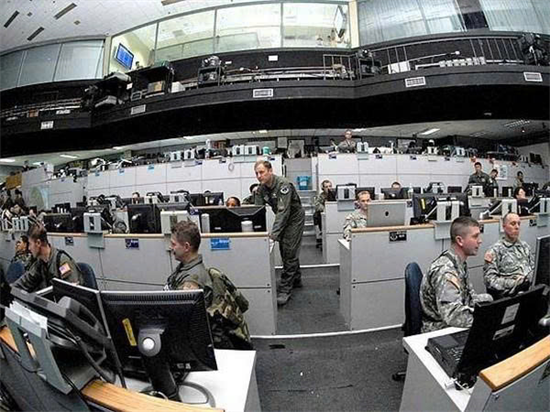 |
| US Cyber Command (photo: usnato.tumblr.com) |
Unlike traditional battlefields on land, at sea, or in the air, cyberspace is borderless, difficult to identify, and hard to control, because cyberattacks can be launched from virtually anywhere, at relatively low cost, yet with potentially enormous consequences. With only a piece of malicious code or a targeted cyber campaign, a nation’s critical information systems can be paralysed or have their data stolen, economic and social activities disrupted, and defence and security severely affected. As a result, modern warfare is no longer confined to the use of conventional military weapons but has expanded to include information warfare, psychological warfare, and cyber warfare.
In reality, cyberspace has become the domain that both “precedes” and “accompanies” armed conflict, fundamentally changing the way war is conducted and perceived. More specifically, modern warfare is no longer measured solely by the number of tanks, aircraft, or the range of missiles, but also by the capacity to control information flows, to disable digital infrastructure, and to manipulate social perceptions. A nation may be pushed into a state of passivity and chaos without a single shot being fired, as cyberattacks target critical infrastructure (such as power grids, banking systems, transportation networks, water supplies, and hospitals); defence and security systems (including communications, command, control, and intelligence systems); the backbone of the economy (technology conglomerates, financial databases, and intellectual property); and social foundations (media, social networks, and public trust), among others.
According to experts, the “effectiveness” of cyberattacks stems from several key causes. First, the growing dependence on digital technologies makes national digital infrastructure increasingly vulnerable to attack. Second, compared with traditional warfare, cyberattacks do not require costly weapons or huge forces; at relatively low cost, they can inflict damage on a strategic scale. Third, tracing the source of cyberattacks is highly complex, blurring the boundaries between warfare, terrorism, and cybercrime. Fourth, there is still no comprehensive international legal framework clearly regulating behaviour in cyberspace; norms of conduct and thresholds for what constitutes an “act of war” continue to evolve as technological development outpaces regulatory capability.
Researchers and experts have assessed that cyberattacks are becoming increasingly sophisticated, no longer limited to data theft or service disruption, but evolving into weapons capable of causing widespread damage such as waging information warfare to manipulate public opinion; inciting internal political instability or conducting espionage and sabotage campaigns; stealing trade secrets and advanced technologies, and disrupting global supply chains, among other threats. Whereas in the past, cyberattacks were largely isolated, technically simple, and relatively easy to detect, today’s attackers employ a wide range of new methods that are well-organised and meticulously prepared. These targeted campaigns often unfold over extended periods, covertly infiltrating systems to gather information or waiting for an opportune moment to inflict significant damage. Moreover, cyberattacks are no longer confined to disrupting information systems, but have expanded to include data manipulation, interference with operational activities, and simultaneous impacts across multiple economic and social sectors. Notably, attackers exploit advanced technologies, particularly artificial intelligence, big data analytics, and automation, to identify security vulnerabilities and develop highly sophisticated and difficult-to-detect attack techniques. Methods such as polymorphic malware, fileless attacks, identity spoofing, and fraud via email and social media pose serious challenges to traditional security measures. Even more concerning, many attacks are tailor-made for specific targets, reducing the effectiveness of early warning mechanisms and timely response capabilities.
The growing sophistication of cyberattacks places increasingly high demands on defence and security safeguards. Meanwhile, many information systems continue to contain vulnerabilities due to outdated technologies, lack of interoperability, or human factors. Consequently, many countries have identified cybersecurity as a top strategic priority and as an ideological and information front, where core values, national interests, and public trust must be protected. Strength in this “battlefield” plays a vital role in maintaining political stability, social order and safety and a peaceful environment for development. Accordingly, great emphasis is placed on building and developing cyber operations forces, as well as investing in high technologies, artificial intelligence, and big data analytics.
The development of cyber operations forces: An inevitable trend among many nations
Tasked with safeguarding national information security in cyberspace, cyber operations forces play a role that extends beyond mere defence to include monitoring, early warning of potential threats, incident response, and post-incident recovery. In many countries, these forces are systematically organised and operate alongside traditional armed forces, particularly through close coordination with government agencies, enterprises, and social organisations to build a “digital shield” that protects critical information systems, vital data, and the legitimate rights and interests of citizens.
According to experts, at present, the US is regarded as one of the world’s leading countries in terms of cyber warfare capabilities. With substantial investment from both the government and the military, these forces possess advanced cyber intelligence systems and a large, highly qualified team of specialists. As early as 2009, the US established the US Cyber Command, initially subordinate to the US Strategic Command. By 2018, it was officially elevated to a unified combatant command, on a par with other major commands of the US Armed Forces. Its missions include protecting military networks; ensuring the security of information, data as well as command and control capabilities; deterring and countering adversarial cyber threats; and conducting cyber operations in support of the military, thereby safeguarding strategic advantages and maintain US superiority in conflict situations. The structure of the US Cyber Command integrates personnel from all service branches, including Army, Navy, Air Force, Marine Corps, and Space Force with cyber mission teams as its core (comprising thousands of technology specialists, engineers, analysts, and military officers who are intensively trained in cyber operations). The strength of this force continues to grow through its close integration with the US National Security Agency, particularly in the sharing of resources, intelligence and advanced technical capabilities.
Russia is also regarded as one of the world’s leading nations in cyber warfare capabilities. Instead of publicly announcing a “Cyber Command” following the Western model, Russia builds its cyber operations forces in a flexible manner, closely integrating the military, intelligence agencies, and specialised technical units, to protect national information infrastructure and secure strategic advantages over potential adversaries. Although Russia’s cyber operations forces are not organised under a single centralised command, their roles are clearly defined. Accordingly, information operations units within the Russian Armed Forces are responsible for protecting military systems and conducting operations in cyberspace, while electronic warfare and digital technical units combine jamming, information protection, and cyberattacks. In addition, there are groups of high-tech specialists who are intensively trained in programming, cybersecurity, and data analysis. Notably, Russia places special emphasis on training young personnel with strong mathematical and technological capabilities, viewing them as a core source of strength for future cyber operations.
With regard to China, the country began early on to build and develop cyber operations forces, regarding them as a key component of military modernisation and the protection of national interests in the digital era. In its defence documents and national security strategies, Beijing has repeatedly emphasised the need to “protect cyber sovereignty” as an integral part of national sovereignty. From China’s perspective, modern warfare is “informationised” and is evolving toward “intelligentised” warfare, in which superiority in cyberspace can determine the course of a conflict from the very outset. Therefore, building strong cyber operations forces is considered essential to enhancing strategic deterrence and defensive capabilities. Accordingly, in the course of military modernisation, China has gradually consolidated the organisation of its cyber operations forces in a more centralised and unified structure aimed at improving the protection of military information systems and critical infrastructure; monitoring, detecting, and countering cyber threats; and remaining ready to conduct cyber operations when required to safeguard national security interests. The integration of cyber capabilities with other forms of warfare clearly reflects the Chinese military’s orientation toward joint, multi-domain operations. In addition to the US, Russia, and China, many other countries, including the UK, India, Germany, France, and Israel, are also intensifying investment in and development of cyber operations forces, with increasingly sophisticated organisational structures and steadily enhanced operational capabilities.
In the face of growing traditional and non-traditional security challenges, the development of cyber operations forces has become inevitable for all nations. They constitute a “shield” that protects critical information systems, and serve as a symbol of a nation’s capacity to master science and technology and defence strength in the digital era.
LAM PHUONG