
Building provinces and municipalities into strong defensive zones is a strategic policy of our Party and State in the cause of national construction and defence. Fully aware of this policy, in recent years, Son La province has effectively mobilised and utilised resources to strengthen its defensive zone, thereby meeting the requirements of safeguarding the Fatherland in the new situation.
Son La is a mountainous border province holding an important position in terms of defence, security, and diplomacy in the Fatherland’s northwestern region. The province still faces many difficulties, with floods and landslides occurring frequently; there are factors that may destabilise its political security situation. Hence, effectively fulfilling defence and security tasks, building a strong defensive zone, and maintaining a peaceful, stable environment for development are of utmost importance.
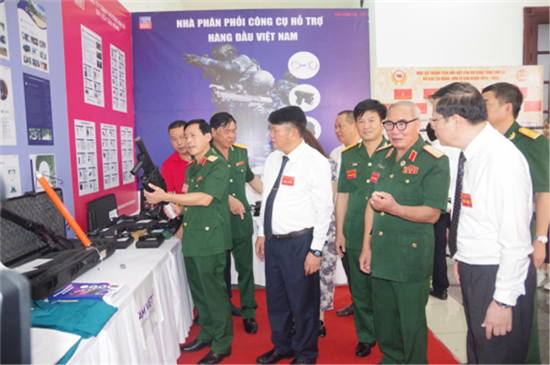 |
| Training models and equipment exhibited during the provincial armed forces’ Determined to Win Emulation Congress for 2019 - 2024 period |
Deeply grasping the Party’s military and defence lines and policies, particularly the Resolution of the 8th Plenum of the 13th Party Central Committee on the Strategy for Fatherland Protection in the New Situation, Conclusion 64-KL/TW, dated 30 October 2019, by the 12th Politburo on stepping up the implementation of the 10th Politburo’s Resolution 28-NQ/TW, dated 22 September 2008, on continuing to build provinces and municipalities into strong defensive zones in the new situation, the Government’s Decree 21/2019/ND-CP, dated 22 February 2019, on defensive zones, together with relevant directives and documents issued by the Central Military Commission (CMC), the Ministry of National Defence (MND), and Military Region 2’s Command, the Provincial Military Command (PMC) has promoted its core role in closely working with departments, agencies, sectors, and localities to give advice to the Provincial Party Committee, the Provincial People’s Council, and the Provincial People’s Committee on measures to lead, direct, and perform military and defence work, especially the building of a strong defensive zone.
Thanks to the resolute involvement of party committees and heads of agencies, units, and localities, awareness and a sense of responsibility among all levels and sectors as well as the entire armed forces and people regarding military and defence work and defensive zone building have been raised. Mechanisms of leadership, direction, and administration have gradually been perfected and operated in a synchronised, smooth manner. The potential, posture, and overall strength within the provincial defensive zone have been strengthened, while the provincial armed forces have been built to be “adept, compact, strong”, and capable of playing a core role in defence and military tasks.
From its experience and results in defensive zone building, the province has drawn several lessons which also serve as solutions to be adopted in the coming period.
First, intensifying dissemination and education to raise awareness and a sense of responsibility among cadres, party members, and the people regarding defensive zone building. As over 80% of the population of the province are ethnic minorities, with uneven educational levels and many economic, social, cultural difficulties, the PMC has advised the Provincial Party Committee, the Provincial People’s Council, and the Provincial People’s Committee to direct departments, sectors, and localities to strengthen dissemination and education to render cadres, party members, and the people fully aware of the position, role, and importance of building a strong provincial defensive zone, thereby enhancing their sense of responsibility in the implementation process. Dissemination and education work has been conducted broadly, comprehensively, with a focus on resolutions and directives of the Party, State, CMC, MND, Military Region 2, and the province regarding Fatherland construction and protection, local military and defence tasks, and especially defensive zone building.
In the process, methods of dissemination and education have been applied flexibly, creatively, such as stage performances in ethnic minority languages, mobile propagation teams, and dry-season border patrol marches combined with mass mobilisation. Alongside strengthening dissemination via specialised programmes and columns of provincial and central newspapers and radio - television agencies, the PMC has given advice and direction on effectively executing Projects 1371 and 571, promoting its role as the Standing Agency of the Provincial Defence and Security Education Council in defence and security education for various target groups, thus contributing to consolidating the grass-roots political system, building a firm “people’s hearts and minds posture”, creating favourable conditions for building strong, modern all-people national defence and a solid defensive zone across the province.
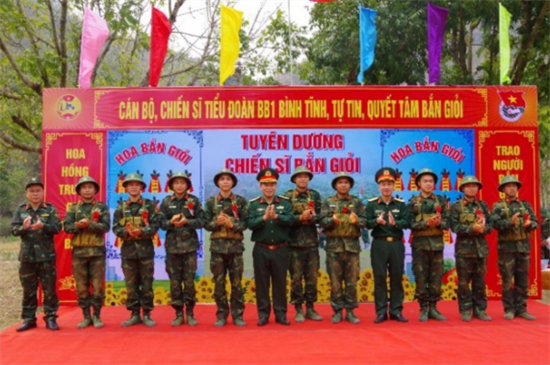 |
| PMC commends soldiers with brilliant results in shooting test |
Second, fostering socio-economic and cultural development in line with defence, security, and foreign affairs. Grasping the policy of linking socio-economic, cultural development with defence and security, the PMC has worked with departments and sectors to give advice to the province on adjusting and supplementing socio-economic, cultural development master plans of the province, each region, and each locality in association with the planning of military works within the provincial defensive zone, participating in appraising and closely supervising projects from planning to execution stages. Priority has been given to developing key economic sectors based on the advantages of each region, especially high-tech agricultural production associated with processing industries in areas such as Mai Son, Thuan Chau, Moc Chau, Van Ho, Yen Chau, and border areas, thereby increasing production value, ensuring food security, and forming dual-use industrial zones and clusters. Ecotourism and resort tourism have been promoted in Moc Chau, Van Ho, the Son La Hydroelectric Reservoir area, and other localities with great potential. As a result, the province’s annual GRDP growth has exceeded 3%, creating material resources for defensive zone building.
On the basis of economic development, the PMC has coordinated with relevant agencies to advise the province on investing in transport, health care, and telecommunications infrastructure, as well as key military works, logistics - technical bases, rear bases, and key defensive areas in a synchronised, interconnected, solid, dual-use manner to serve both civilian needs and defence and security missions.
In addition, the PMC has worked with relevant forces to effectively conduct people-to-people diplomacy and defence diplomacy with northern Lao provinces in accordance with the Party’s foreign policy lines. In 2025, the provincial armed forces coordinated with the Lao forces to organise 31 bilateral patrols, 284 unilateral patrol teams, and 1,128 patrol and control teams, contributing to building a border of peace, friendship, stability, cooperation, and development between Vietnam and Laos.
Third, making the provincial armed forces comprehensively strong, with high overall quality and combat readiness. The PMC has exercised its leadership and direction over the building of strong agencies and units in terms of politics, ideology, organisation, morality, and personnel. It has directed force adjustments under higher-level guidance, establishing regional defence commands, receiving and tightly managing the Provincial Border Guard Command in compliance with regulations without interrupting task performance. It has provided direction and guidance for localities to consolidate commune-level military commands, particularly in key defence and security and border areas. Training for the standing force has been organised according to the motto “basics, practicality, solidity”; this force has been trained to be proficient in using in-service weapons and equipment and master specialised tactics and coordination skills. Training courses have been intensified to improve commune-level military command cadres’ political and military knowledge and advisory capabilities.
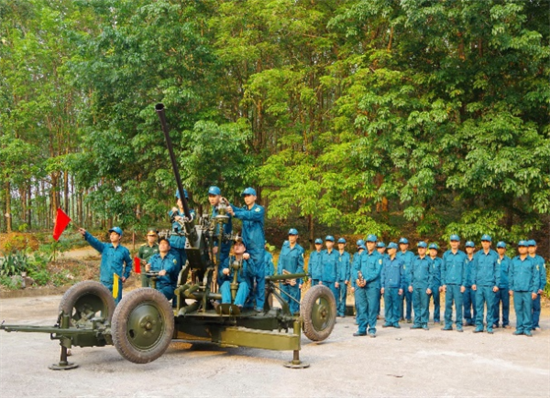 |
| Training course designed for the militia and self-defence force |
In addition, agencies, organisations, and localities have been directed and guided in building a strong, extensive militia and self-defence force with a structure and proportion suitable to adjusted administrative boundaries. Importance has been attached to developing standing militia units in border communes. Due attention has been paid to building a powerful, high-quality reserve force with more than 80% of its members being correctly assigned to their military specialities, meeting the requirements of force reinforcement and expansion in contingencies. Combat readiness duty regimes have been strictly maintained, while administrative reform and digital transformation have been stepped up. Timely, adequate logistics and technical support has been provided for all tasks. Besides, the provincial armed forces have actively taken part in disaster prevention and control and search and rescue operations. In 2025, all members of the standing force met the training requirements, with over 83% achieving merit or distinction; the militia and self-defence and reserve forces achieved good results in training work.
Fourth, building an interconnected, solid, in-depth military posture. The PMC has regularly coordinated closely with the Department of Agriculture and Environment and the Department of Construction in advising the province to review, adjust, and supplement defence disposition and defence land use master plans, ensuring compatibility with the defensive posture of Military Region 2, allocating budget for military activities and military posture construction within the provincial defensive zone. Commune-level military commands have been directed to give advice to local party committees and authorities on working with regional defence commands to focus on constructing and upgrading combat bases, rear bases, secret assembly areas, and key defensive works such as command posts, observation stations, and air defence positions, thereby initially forming an interconnected posture among different levels ready to serve defence and security situations.
Regional defence commands have been directed to receive and closely manage military works and training grounds following the termination of district-level military command operations. Commune-level military commands have developed and adjusted their defensive combat plans to guarantee synchronisation and compatibility with new administrative boundaries.
The achievements gained in defensive zone building constitute a solid foundation for the Party Organisation, authorities, armed forces, and people of Son La province to keep fostering socio-economic, cultural development in conjunction with defence, security, and foreign affairs, contributing to firmly safeguarding the Fatherland in the new situation.
Sr. Col. CHU VAN THANH
Member of the Provincial Party Committee Standing Board
Commander of the PMC
___________
1 - Project 1371: “Promoting the role of the People’s Army in law dissemination and education and encouraging the people to comply with the law at grass-roots level during the 2021 - 2027 period”; Project 57: “The Military participates in encouraging ethnic minority communities to actively combat hostile forces’ plots and tactics aimed at undermining great national unity in the new situation”.