
Throughout the course of the revolution, particularly over the past 40 years of renewal (Doi Moi), the Vietnamese working class has consistently affirmed its pivotal role and great historical mission in the struggle for national liberation, as well as in the cause of building and safeguarding the Fatherland. Entering a new era of development, in the context of accelerating industrialisation and modernisation and deepening international integration, building a modern and strong Vietnamese working class has become an important task - both urgent and long-term - for the Party, the State, and the entire political system.
I. The working class as the vanguard and core driving force of national development
“The Vietnamese working class is a large and growing social force, comprising both manual and intellectual workers who earn wages in various forms of industrial production, business, and services, or in sectors with an industrial nature.”
After 40 years of renewal (Doi Moi), alongside the restructuring of the economy and the rapid development of the private sector, the size of the Vietnamese working class has continued to expand. Notably, with the rise of employment forms in the digital economy, platform-based workers, freelancers, and informal labour have become increasingly prevalent. According to a report by the General Statistics Office, by 2025, employment in the service, industry, and construction sectors has increased in both scale and proportion, with approximately 17.5 million workers in industry and construction and 21.4 million in the service sector.
The structure of the working class has undergone positive transformation, marked by a rapid increase in the proportion of workers in private enterprises and foreign-invested enterprises, alongside a decline in state-owned enterprises. The occupational structure has also shifted significantly, with stronger integration into high value-added industries and deeper participation in global production and supply chains. Workers are increasingly present in modern manufacturing industries, electronics, logistics, and high-tech service sectors. The nature of work itself has also changed considerably, with many new job roles emerging in connection with automated production systems, data utilisation, and digital technologies.
The quality of the working class has improved, with Vietnamese workers demonstrating increasingly higher levels of education, professional qualifications, labour skills, and industrial work discipline. According to surveys, “by 2023, the proportion of trained workers reached 27.2%, of which those with college or university degrees and above accounted for approximately 17%, mainly employed in high-tech sectors such as oil and gas, electricity, telecommunications, information technology, automation, and chemical and biological technologies.” There is a growing number of highly skilled workers capable of adapting quickly to new working environments and actively participating in innovation processes. Notably, a new generation of young workers mastering science and technology is emerging, reflecting the renewed dynamism of the Vietnamese working class in the digital era.
The material and spiritual life of workers has gradually improved. Employment has become relatively stable, incomes and wages have increased, and working conditions have been enhanced. Labour relations have become more harmonious, stable, and progressive, with a significant decline in labour disputes and collective work stoppages. Grassroots democracy mechanisms have been expanded and effectively promoted, while social security and welfare policies have continued to develop.
Research indicates that “the Vietnamese working class now numbers more than 15 million people, accounting for approximately 15% of the population and 29% of the total labour force, contributing nearly 70% of the gross social product,” thereby increasingly affirming its core role within the alliance of the working class, the peasantry, and the intellectual strata under the leadership of the Party, and serving as a solid foundation for the great national unity bloc.
However, the quality of the Vietnamese working class has yet to fully meet the demands of modern production. Skill gaps - particularly in digital competencies - remain significant across sectors and regions; industrial work discipline and professional conduct are uneven; and the living conditions of a segment of workers remain difficult. Disparities in qualifications, income, and working conditions within the working class have led to labour shifts from the formal to the informal sector, undermining the sustainability of the working class. A considerable number of workers remain outside the coverage of trade unions and the social security system. These issues require comprehensive recognition and the implementation of synchronised, decisive, timely, and effective solutions; otherwise, they will directly affect the quality of the working class - an essential resource for national development.
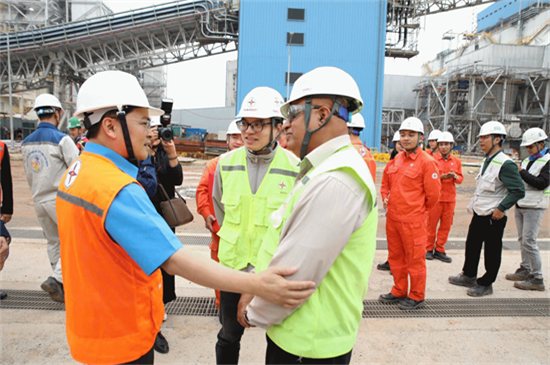 |
| Dr. Nguyen Anh Tuan, President of the Vietnam General Confederation of Labour visits workers at the Quang Trach Thermal Power Plant of Quang Tri province (Photo: baotintuc.vn) |
II. Building a modern and strong Vietnamese working class - a key task in the new era of development
To “successfully achieve the goal of becoming a developing country with a modern industrial base and upper-middle income by 2030, and to realise the vision of becoming a developed, high-income country by 2045 - a peaceful, independent, democratic, prosperous, civilised, and happy Vietnam steadily advancing towards socialism,” the Party has clearly identified strategic pillars for rapid, sustainable national development and for firmly safeguarding the Fatherland. Among these, science and technology, innovation, and digital transformation are regarded as the primary driving forces, while the development of the private sector is considered one of the most important engines of the economy. These orientations directly create the environment, conditions, and momentum for building a modern and strong working class capable of meeting the requirements of the new stage of development.
In particular, in the context of deepening international integration, new opportunities have emerged for the Vietnamese working class, including access to employment, participation in global value chains, exposure to advanced technologies, and the enhancement of professional, digital, and green skills. However, this also brings increasing competitive pressure, the risk of job losses in labour-intensive industries, and higher demands regarding labour standards and social security. At the same time, the Fourth Industrial Revolution and the ongoing process of industrialisation and modernisation in Viet Nam require a transition from simple labour to knowledge-based, digital, and creative work. If the working class fails to adapt in a timely manner, it risks falling behind and losing its pivotal role.
This situation necessitates the building of a modern and strong Vietnamese working class in both quantity and quality, one that is “truly the leading class in the revolutionary cause through its vanguard, the Communist Party of Vietnam.” To achieve this objective, it is essential to implement a number of key solutions in a synchronised and decisive manner.
Firstly, to strengthen political, ideological, and legal education, thereby building a working class with “firm political steadfastness, class consciousness, and a strong sense of national pride and dignity.” Priority should be given to thoroughly implementing Directive No.58-CT/TW dated 10 January 2026 of the Secretariat (13th Tenure) on enhancing the Party’s leadership over political, ideological, and legal education for workers in the new context. Communication and education efforts should focus on equipping workers with a proper understanding of the Party’s viewpoints and policies, as well as the State’s laws on building a modern and strong working class and developing a robust Vietnam Trade Union system in line with the Resolution of the 14th National Party Congress; Resolution No.20-NQ/TW dated 28 January 2008 of the 10th Party Central Committee on continuing to build the Vietnamese working class in the period of accelerated industrialisation and modernisation; and Conclusion No.79-KL/TW dated 25 December 2013 of the Politburo (11th Tenure) on promoting the implementation of Resolution No.20-NQ/TW.
Along with that, greater efforts should be made to disseminate and educate workers on the nation’s proud historical traditions; the position, role, mission, and development of the working class and the Vietnam Trade Union; and to foster national pride, dignity, and political awareness among workers. Concurrently, communication efforts must be strengthened to help both employers and employees identify and prevent acts that exploit worker organisations within enterprises to undermine national security or disrupt social order and safety. It is also essential to actively counter misinformation, distortions, and hostile narratives concerning the working class and trade unions. Attention should be paid to the application of digital technologies; enhancing coordination mechanisms; building, consolidating, and strengthening the contingent of communication and education personnel; and improving institutional frameworks and resource allocation to effectively support political, ideological, and legal education for workers.
Secondly, to promote emulation movements and create a practical environment for the working class to contribute proactively and effectively to achieving double-digit economic growth. Trade unions at all levels should take the initiative in developing and implementing coordination mechanisms with employers to foster emulation movements. Appropriate incentive mechanisms are needed to encourage and create favourable conditions for workers to actively participate in patriotic emulation movements and revolutionary action campaigns, thereby promoting initiative, creativity, and productivity improvement. The organisation and implementation of emulation movements should be renewed in a practical, effective manner, tailored to specific groups and sectors. Emulation should be closely linked with commendation and reward systems; policies should be studied and proposed to provide rewards for innovations based on a proportion of the economic value generated, thereby creating strong incentives for workers to unleash their creative potential.
Trade unions at all levels should continue to effectively launch and implement the movement “Skilled Labour - High Productivity - Good Income,” while closely coordinating with employers to realise the Government’s policy of improving productivity and national competitiveness, thereby contributing to achieving the double-digit economic growth target set out in the Resolution of the 14th National Party Congress.
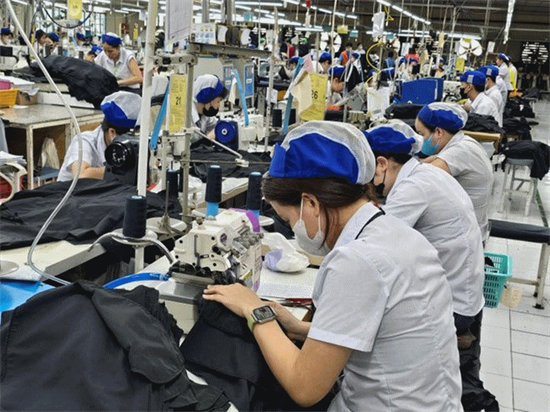 |
| Workers in the garment textile industry (Photo: baochinhphu.vn) |
Thirdly, to fundamentally innovate the operational methods of trade union organisations, ensuring the effective performance of their representative function in caring for and protecting the legitimate and lawful rights and interests of workers. It is essential to continue thoroughly implementing Resolution No.02-NQ/TW dated 12 June 2021 of the Politburo (13th Tenure) on reforming the organisation and operation of the Vietnam Trade Union in the new context. The Vietnam General Confederation of Labour should closely coordinate with state agencies, socio-political organisations, and employers to effectively implement the provisions of the Law on Trade Unions, thereby fully exercising the rights and responsibilities of trade union organisations, and actively participating in the formulation and improvement of policies and laws directly related to workers and trade unions.
Resources should be strengthened and the operational scope expanded to reinforce the core function of trade unions as representatives that safeguard the legitimate rights and interests of union members and workers. Greater emphasis should be placed on collective bargaining, the conclusion and monitoring of collective labour agreements, workplace dialogue, and the settlement of labour disputes in accordance with the law. Proactive measures should be taken to prevent disputes, thereby contributing to the development of harmonious, stable, and progressive labour relations. Trade unions should continue to implement welfare programmes aimed at improving the material and spiritual well-being of workers, while actively participating in inspection, supervision, and oversight of the implementation of policies and regulations concerning workers in accordance with legal provisions.
Concurrently, methods of mobilising and organising workers should be renewed to align with sector-specific characteristics and labour mobility trends. Priority should be given to developing strong and sustainable trade union organisations, particularly in the non-state sector, labour-intensive enterprises, and areas with flexible or underdeveloped labour relations, ensuring that workers clearly perceive the benefits of trade union membership.
Trade unions should also fully exercise their role in social supervision and social critique as prescribed by law, promptly detecting and recommending action against violations of workers’ rights and interests, thereby strengthening trade unions as a reliable support for workers. The application of information technology should be enhanced in surveying, collecting feedback, and analysing data, enabling timely adjustment of trade union activities in line with practical needs, with worker satisfaction and well-being serving as key performance indicators.
Trade unions at all levels should proactively coordinate with relevant agencies and employers in vocational training, upskilling, and reskilling initiatives for workers. Efforts should be intensified to promote a learning society and lifelong learning movements, creating favourable conditions for workers to improve their educational attainment, professional qualifications, vocational skills, soft skills, work discipline, adaptability, and ability to master knowledge and technology. This will enable them to integrate internationally and foster innovation in the new era, ultimately becoming “digital citizens.”
Fourthly, to implement comprehensive digital transformation, creating an ecosystem and real-time interaction mechanisms between trade unions and their members and workers. A synchronised digital trade union ecosystem should be developed, ensuring connectivity from the Vietnam General Confederation of Labour to grassroots trade unions, based on a unified database of union members and workers and integrated digital services that effectively support leadership, management, and member care. A two-way, real-time interaction mechanism should be established between trade unions and their members and workers through official digital platforms, enabling the timely reception and resolution of feedback, legal consultation, and practical support, thereby strengthening trust and engagement among union members and workers. Trade union activities should be comprehensively digitised - from membership management and financial administration to the organisation of meetings, dialogue, and collective bargaining. The application of digital signatures and electronic records should be expanded to reduce administrative procedures while enhancing efficiency, effectiveness, and transparency. At the same time, digital service and welfare systems should be developed with a member-centric approach, addressing practical needs related to legal support, employment, skills development, and healthcare. Digital capacity must be strengthened, with a strong emphasis on information security and personal data protection. Concurrently, institutional frameworks and policies should be further improved, technological cooperation enhanced, and social resources mobilised to ensure effective and synchronised digital transformation, thereby building a professional and modern trade union organisation in the new era.
Finally, to advise and propose to the Party and the State the comprehensive and substantive review and assessment of the 20-year implementation of Resolution No.20-NQ/TW dated 28 January 2008 of the 10th Party Central Committee. On that basis, appropriate leadership orientations and policy directions should be formulated for building a modern and strong working class in line with the Resolution of the 14th National Party Congress. Besides, efforts should be made to study, develop, and promulgate a national human resource development strategy, in which the position, role, and development orientation of the working class are clearly defined. This includes concretising development objectives, roadmaps, and criteria in alignment with the requirements of accelerating industrialisation and modernisation on the foundation of the digital economy, green economy, and innovation. Priority should be given to developing the working class in key sectors and industries, particularly high technology, foundational industries, and high value-added sectors of strategic importance for achieving rapid and sustainable growth, enhancing labour productivity and national competitiveness, and contributing to the successful attainment of double-digit economic growth target.
The commemoration of the 140th anniversary of International Workers’ Day (1 May 1886 - 1 May 2026) provides an opportunity to revisit and reaffirm its historical significance and enduring values, as well as to honour the role, position, and important contributions of the Vietnamese working class and labour force in the cause of national construction and defence. At the same time, it also places new demands and increasing responsibilities on the Party, the State, the entire political system, each worker, and society as a whole. In this context, trade union organisations bear a significant responsibility in building a modern and strong Vietnamese working class - one that truly serves as the vanguard in developing a modern industrial base and as the core of a skilled, knowledgeable workforce with internationally competitive working standards - thereby contributing to the country’s robust and prosperous development in the new era.
Dr. NGUYEN ANH TUAN, Member of the Party Central Committee, Secretary of the Party Committee and President of the Vietnam General Confederation of Labour