International integration is an inevitable trend that both serves as a driving force for businesses and prompts them to adapt in order to survive and develop. Fully aware of this, Factory Z121 has always proactively promoted international integration and improved its production and business efficiency and competitiveness for the sake of rapid and sustainable development.
Factory Z121 (under the General Department of Defence Industry) was established on 7 September 1966. It is tasked with researching and producing various types of fuses, firing mechanisms, detonators, incendiary substances, etc. for national defence as well as engaging in production and business activities for socio-economic development.
 |
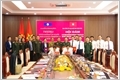
| Sr. Lt. Gen. Pham Hoai Nam, Deputy Minister of National Defence inspects a production line of the Factory in the South |
Over the past 60 years of construction and development, generations of the Factory's cadres, engineers, and workers have constantly strived to surmount all difficulties and hardships, achieved numerous accomplishments in combat and production, and successfully fulfilled their assigned tasks. Their achievements have been recognised and highly appreciated by the Party, the State, and the Ministry of National Defence (MND), thereby building up the Factory’s glorious tradition of “good solidarity, strict discipline, proactiveness, self-reliance, self-strengthening, industriousness, creativity”.
In recent years, with the support of higher echelons, the Factory has made fairly comprehensive progress. Its material foundations and technical infrastructure have been developed towards modernisation and synchronisation; many production lines have been automated, while digital technologies have been applied to production management and monitoring. Products from the Factory have established their brand in both domestic and international markets. Alongside these advantages, the Factory also faces numerous difficulties and challenges, particularly as our country’s international integration becomes increasingly intensive and extensive; the 4th industrial revolution imposes more demanding requirements in technical, technological, and qualitative terms on a global scale; competition from foreign businesses is also intensifying. Against this backdrop, the Factory’s Party Committee and Directorate have advocated promoting the heroic tradition and inspiring the aspiration to “reach out to the wider world”, proactively stepping up international integration, making breakthroughs in enhancing production and business capacity, expanding export markets, and fostering rapid, sustainable development in the new period.
Resolute leadership, renewed thinking and action, breakthroughs in international integration
The process of renewing its management and production methods, from production plans assigned by higher echelons to business accounting and a piece-rate pay system in 1986, as well as from proactive cooperation with Japanese partners in 1997 to access modern firework production technology to recent projects on modernising technology and promoting digital transformation, has provided the Factory with many valuable lessons. The Factory has been fully aware that development requires innovation, and that the renewed thinking of party committees and commands at all levels in leadership and direction is of utmost importance and decisive significance. Therefore, in order to carry out international integration effectively and in a right direction, the Factory’s Party Committee and Directorate have grasped higher-level resolutions and directives on international integration, adhered to the MND’s orientations for the development of weapons and technical equipment and the demand for economic products in domestic and international markets, promoted collective wisdom, formulated the Production and Business Development Strategy for 2025 - 2030, and issued a specialised Resolution on economic production and export towards 2030, with clearly defined goals, road map, and breakthroughs. According to the Strategy and specialised Resolution, the Factory will be developed towards modernisation, with sufficient capacity to research and manufacture advanced and modern products of high quality and high localisation rates; the production of key products for domestic consumption and export will be stepped up, with exports serving as the main focus; the development of sustainable markets and extensive customer networks will be the overarching goal.
To realise these goals, the Factory has focused on renewing its governance methods in a scientific and flexible direction, enhancing the role of advisory bodies in researching, proposing, and executing international cooperation programmes. At the same time, it has proactively selected partners with great scientific, technological potential, advanced management capabilities, and commitments to long-term cooperation, giving priority to cooperation programmes on technology transfer, human resource training, new product development, and export market expansion. In the process, it has regularly reviewed, adjusted, and supplemented its managerial and operational regulations and procedures, promptly addressing “bottlenecks” and shortcomings, particularly in scientific research cooperation and technology transfer.
 |
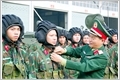
| Giving encouragement to staff members of the Factory |
The Factory has stepped up a comprehensive transformation, from the traditional management model towards modern corporate governance, with production quality and efficiency being put at the centre. It has focused on streamlining its organisational structure, reducing intermediate levels and indirect labour, expanding the autonomy of production sections in accordance with their responsibilities. It has promoted the application of advanced management systems, such as Enterprise Resource Planning (ERP) on the military network, Manufacturing Execution System (MES), and key performance indicator (KPI)-based assessment systems, gradually establishing a smart management model and optimising production costs. The entire production process, from research and design to production, quality inspection, packaging, storage, and transport, has been standardised and strictly controlled under the ISO 9001:2015 quality management system and other specialised technical standards. The product traceability system has been completed to ensure that all products from the Factory could meet stringent requirements for quality, stability, and reliability, etc. Through these efforts, the Factory has built a professional, disciplined production environment, established its reputation, and gained the confidence of domestic and foreign partners, thereby contributing to enhanced competitiveness and expanded export markets.
Developing scientific and technological potential as a solid foundation for international integration
Scientific and technological potential, particularly high-quality human resources, is a key factor and an important driving force for the survival and development of a business in the digital era. Hence, the Factory Party Committee issued Resolution 1209-NQ/DU, dated 14 April 2020, on “leadership over the building of a contingent of cadres, particularly key cadres of agencies and units and leading technical and technological experts at the Factory, to meet task requirements in the new situation”. Emphasis has been placed on building a pool of highly capable senior managers with a good command of foreign languages and great capabilities in accessing technology and managing modern production; a corps of skilled engineers and technical workers as the core force in key fields has also been developed. To that end, the Factory has comprehensively assessed the quality of its cadres, engineers, and technicians, formulated human resource training and development plans for each specialised field, standardised its staff members’ qualifications and skills in line with their positions, and focused on attracting and recruiting high-quality personnel, particularly cadres trained overseas and top experts and engineers in key fields. It has closely combined on-site training with training and development via technology transfer and international cooperation programmes. It has selected cadres, engineers, and employees with creative thinking and great capacity to form “specialised research groups”, providing them with the best possible facilities and mechanisms to enable them to master technologies and develop advanced and modern products. Thanks to its practical and effective measures, it has succeeded in developing a proper, highly qualified human resource structure, with 100% of its technical cadres holding university degrees or higher, more than 30% holding postgraduate degrees, and nearly 60% of its technical workers attaining advanced skill grades, thus increasingly meeting its task requirements.
Furthermore, the Factory has made intensive investment in technology and modernised its equipment and facilities. Closely following its task requirements and development strategy for each period, the Factory has given proactive advice to higher echelons on investment options for upgrading infrastructure and procuring equipment and technology lines towards dual-use and modernisation, in accordance with international standards. Priority has been given to replacing obsolete equipment and deteriorated workshops, supplementing, upgrading, and replacing technology lines, especially automating hazardous and toxic stages in the production of fireworks and industrial explosives, as well as facilities and warehouses in all three regions of the country. In recent times, the Factory has synchronously and effectively implemented a number of important projects and programmes, especially on enhancing the capacity for producing propellant charges, firing mechanisms, and fuses, as well as modernising non-explosive firework and explosive firework production lines, thereby creating new advances in technological potential and technical assurance. Besides, it has continued completing its laboratory, testing, workshop, and warehouse systems, etc., to meet the requirements for research, production, quality inspection, and environmental protection.
 |
| Fireworks produced by the Factory at Da Nang International Fireworks Festival 2025 |
Promoting new product development, seeking new partners, expanding export markets
With experience in participating in international integration from an early stage, the Factory has determined that, in order to achieve sustainable development, alongside maintaining its brand reputation and product quality, it must actively develop new, distinctive products that better meet the standards of domestic and international markets. To that end, it has focused on researching and mastering technologies for designing and manufacturing new, modern defence products, with a high localisation rate and an orientation towards exports. For economic products, due attention has been paid to developing new lines of environmentally friendly non-explosive fireworks, explosive fireworks, and industrial explosives according to international technical standards.
To expand its markets, the Factory has stepped up trade promotion activities and actively participated in specialised trade fairs and exhibitions at home and abroad. It has effectively taken advantage of high-profile events, such as Da Nang International Fireworks Festival, to promote its research and production capabilities, introduce its products, seek new partners, and expand export markets. It has also actively developed its international cooperation programmes (currently with partners from 10 countries, including France, the US, China, Belgium, Japan, Spain, and South Africa), creating opportunities to increase the number of strategic partners and more deeply participate in the firework and industrial explosive supply chains.
Promoting its heroic tradition, Factory Z121 will continue to promote international integration in a proactive, active, effective manner and constantly enhance its production and business capacity to contribute to building an autonomous, self-reliant, self-strengthening, dual-use, modern Vietnamese defence industry capable of meeting the requirements of Fatherland protection in the new era.
Sr. Col. CHU VIET SON
Director of the Factory